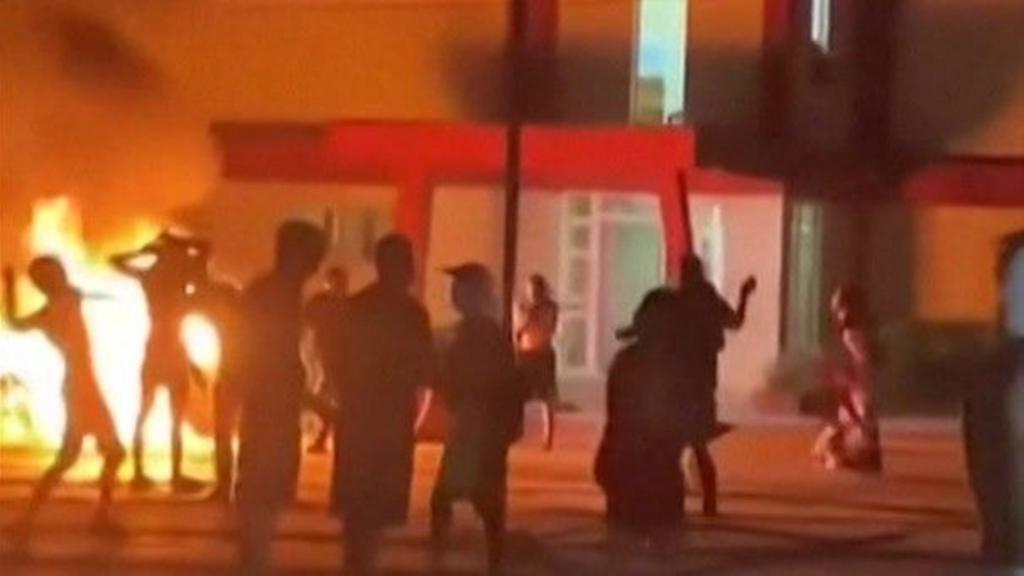
Cuba's ongoing energy crisis reached a social boiling point this weekend as a group of protesters stormed and ransacked a local Communist Party office in Holguín province. The incident, captured in videos that went viral on social media, shows frustrated citizens forcing their way into the party building, smashing furniture, and voicing their anger over the chronic electricity shortages that paralyze daily life on the island. This event marks one of the most direct and symbolic challenges to the government's authority in recent years, highlighting the deep-seated popular discontent after months of prolonged blackouts that can last up to 18 hours a day in some regions.
The context for this social explosion is a multifaceted economic crisis, considered by many analysts to be the worst in decades. Cuba faces a severe fuel shortage, an obsolete and dilapidated electrical infrastructure, and the impact of U.S. economic sanctions, all exacerbated by the COVID-19 pandemic and diminished support from key allies like Venezuela. The national power grid, reliant on aging thermoelectric plants and foreign oil supplies, has repeatedly collapsed. The government has implemented strict rationing, but scheduled outages often overrun, leaving households, hospitals, and small businesses in darkness and the sweltering Caribbean summer heat, with temperatures exceeding 95 degrees Fahrenheit.
Official data and independent reports paint a bleak picture. According to Cuba's Electrical Union (UNE), the generation deficit has at times exceeded 30% of peak demand. This translates into rotating blackouts affecting millions. The already contracted economy suffers million-dollar losses. Small businesses, vital after the opening of the private sector, are shutting down. Agricultural production and the cold chain are compromised, worsening food shortages. In statements to official media, President Miguel Díaz-Canel has acknowledged the severity of the situation, attributing it to "technical failures," "fuel limitations," and the U.S. "economic blockade." "We are working tirelessly to normalize service," he stated in a recent televised address, asking for the people's "understanding and resilience."
However, official statements contrast with the rage on the streets. In videos from the Holguín incident, protesters can be heard chanting slogans like "Patience has run out!" and "We want light!". Witnesses cited by independent media such as 'Diario de Cuba' describe a spontaneous protest that grew rapidly, reflecting a widespread feeling of desperation. Although security forces later arrived to disperse the gathering, the image of a ransacked party headquarters is powerful in a country where the Communist Party holds a monopoly on political power. This event is reminiscent of the massive July 11, 2021, protests, the largest in decades, which were also driven by economic and health crises and led to a harsh crackdown and hundreds of arrests.
The impact of this new episode is significant politically and socially. It undermines the official narrative of unity and resistance, revealing fractures in the social fabric. For the government, it represents a serious challenge to governability at a time of extreme vulnerability. Internationally, it highlights the failure of economic policies and the urgent need for structural reforms. Human rights organizations have called for restraint and dialogue. The official response so far has been a combination of promises of technical solutions and a call for order, without announcing substantial policy changes. The Cuban diaspora watches with concern, while internet access, though intermittent, allows these protest images to cross borders.
In conclusion, the assault on the Communist Party office in Holguín is a dramatic symptom of a deepening humanitarian and infrastructure crisis. Beyond the act of vandalism, it is a cry for help from a population exhausted by deprivation. The state's inability to guarantee a basic service like electricity is eroding its legitimacy and testing the limits of citizen patience. Without a massive injection of investment in renewable energy, an urgent modernization of the grid, and possibly a geopolitical relaxation that allows access to financing and fuel, Cuba is heading toward a period of greater instability. The light at the end of the tunnel, both literally and metaphorically, still seems very distant for the eleven million Cubans awaiting a lasting solution to their daily hardships.