In a move underscoring growing concern over stability in a volatile region, the United States is significantly bolstering its military footprint in the Middle East. According to media reports and sources within the Department of Defense, the Pentagon has ordered the deployment of additional Marine Corps units and directed several key warships toward the area. This force repositioning, which includes both rapid-response capabilities and high-powered naval assets, comes against a backdrop of persistent tensions and multifaceted threats to the security of U.S. forces and their allies in the region.
The strategic context for this deployment is complex. The region remains a tinderbox of simmering conflicts and geopolitical rivalries. Threats to commercial shipping in critical sea lanes, such as the Strait of Hormuz and the Red Sea, have been a constant concern. Furthermore, the activity of Iran-backed militias in Iraq and Syria, which have carried out numerous drone and rocket attacks on bases housing U.S. personnel, represents a direct challenge. The war in Gaza and its regional ramifications, coupled with stalled nuclear negotiations with Iran, create an environment where a minor incident could rapidly escalate. The deployment acts as a deterrent, aimed at preventing any miscalculation by adversaries and ensuring the U.S. has flexible response options.
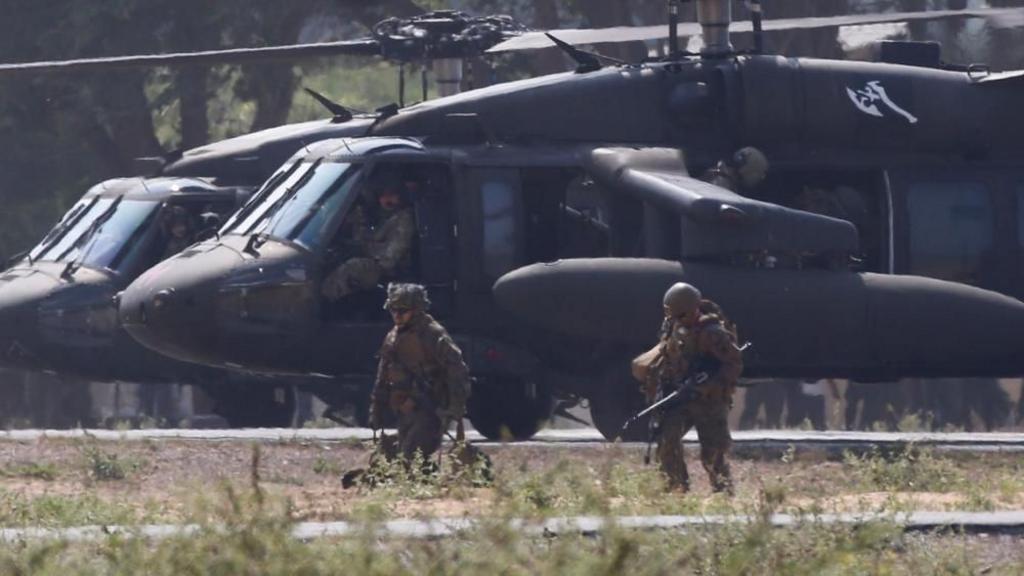
While the Pentagon has not publicly broken down exact numbers, reports suggest the reinforcement includes a Marine detachment aboard amphibious ships, possibly linked to a ready Amphibious Ready Group. On the naval front, destroyers equipped with the Aegis missile defense system, and potentially an aircraft carrier, are expected to adjust their patrols or head to the region. These assets provide a wide range of capabilities: from wide-area air and missile defense to aerial power projection and amphibious assault capability. A spokesperson for U.S. Central Command (CENTCOM) recently stated: 'We consistently maintain our force posture in the region and reserve the right to adjust it as necessary to protect our forces, safeguard the interests of our allies, and ensure freedom of navigation in international waterways.'
The impact of this move is multifaceted. Regionally, it sends a clear signal of commitment to key allies like Israel, Saudi Arabia, and the United Arab Emirates, who view Iran's advancing nuclear and missile capabilities with concern. Simultaneously, it serves as a direct warning to actors such as the Kataib Hezbollah militias in Iraq or the Houthis in Yemen, whose aggressive behavior could face a more forceful military response. For U.S. forces deployed on the ground, the bolstered presence offers an added layer of protection and greater capacity to respond to crises. However, it also raises the U.S. profile, potentially making its bases more prominent targets and increasing the risk of direct confrontation—a delicate calculation military planners must balance.
In conclusion, the U.S. deployment of additional Marines and warships to the Middle East is a defensive and deterrent measure in an increasingly unstable security environment. It reflects an ongoing intelligence assessment pointing to heightened threats against U.S. personnel and interests. While the stated goal is to de-escalate tensions through a demonstration of strength and preparedness, the move inevitably adds another element of military complexity to an already overburdened region. The effectiveness of this deployment will be measured not just by its brute force, but by its ability to stabilize the situation, prevent a larger conflict, and create conditions for diplomatic solutions, which remain the only sustainable path to lasting peace in the Middle East.