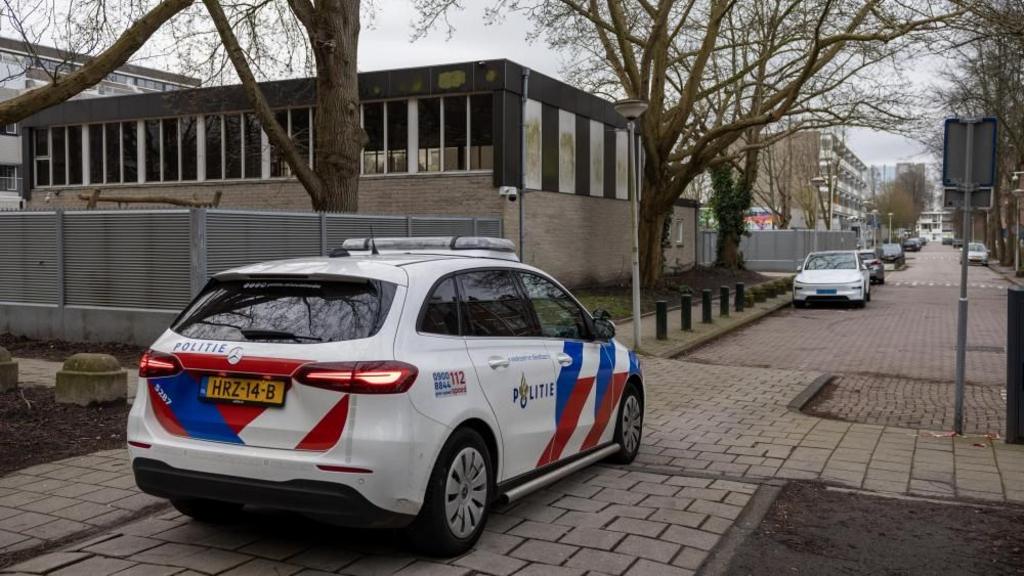
Amsterdam Mayor Femke Halsema has labeled the explosion that damaged a Jewish school in the Buitenveldert district as "a deliberate attack," raising concerns about a surge in antisemitism in the Netherlands. The incident, which occurred in the early morning hours, caused significant damage to the facade and windows of the educational center, though fortunately no casualties were reported as the building was empty. Authorities, including police and intelligence services, have launched a comprehensive investigation, reviewing security cameras in the area and gathering testimonies from neighbors who heard the blast. This act takes place in a context of rising international tension and concern for the safety of Jewish communities across Europe, following the outbreak of the Israel-Hamas conflict last October.
The context of this attack cannot be divorced from the recent spike in antisemitic incidents recorded in several European countries. According to data from the Center for Information and Documentation on Israel (CIDI), the Netherlands experienced a 400% increase in antisemitic incidents in the months following October 7th. The targeted school, part of a Jewish educational complex that includes a synagogue, had become a symbol of the vibrant Jewish community in Amsterdam, a city with a deep and tragic history related to the Holocaust. Mayor Halsema, visibly moved during a press conference in front of the damaged building, stated: "This is a cowardly attack against children, against education, and against the fundamental values of our society. We will not allow fear to take root in our city."
The mayor's statements have been backed by Prime Minister Mark Rutte, who strongly condemned the attack and promised "all necessary resources" to find those responsible. Meanwhile, the Federation of Jewish Communities in the Netherlands (NIK) issued a statement expressing its "profound shock and sadness," while urging authorities to implement concrete protective measures for religious and educational institutions. As forensic teams work at the scene, increased police presence has been deployed around synagogues and Jewish schools in Amsterdam, Rotterdam, and The Hague. The investigation will explore all lines of inquiry, including the possibility of a terrorist act or a hate crime motivated by extremism.
The impact of this bombing goes beyond material damage. It has sown alarm within a community that still holds the memory of persecution during World War II and has reopened the debate on the effectiveness of integration policies and the fight against hate speech. Civil society organizations have called for vigils and peaceful demonstrations in several Dutch cities under the slogan "No to hatred, yes to coexistence," showing broad social rejection of the violent act. Security experts warn that although the Netherlands has robust structures against extremism, polarization on social media and the importation of international conflicts represent a growing challenge. The judicial response will be key in determining whether this is an isolated event or part of a coordinated campaign.
In conclusion, the explosion at the Jewish school in Amsterdam serves as a grim reminder of the persistence of antisemitism in the heart of Europe. The unequivocal response from Dutch authorities, labeling it plainly as a deliberate attack, draws a clear line against intolerance. However, the true test will be the capacity to prevent future incidents, protect minorities, and foster social dialogue that isolates extremists. The international community watches with concern, as the safety of Jewish citizens is a critical barometer of democratic health and the rule of law in any society. The rebuilding of the school building must be accompanied by a collective effort to rebuild trust and security for all inhabitants of the Netherlands.