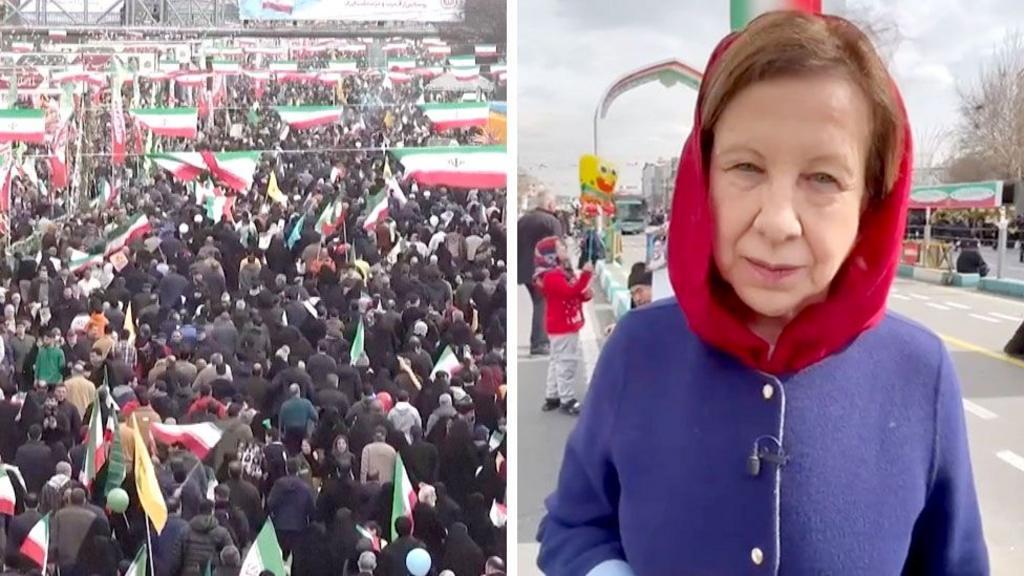
From the streets of Tehran, BBC correspondents have documented what they describe as the Iranian government's "political reply" to a new wave of massive protests shaking the country. The demonstrations, which began approximately ten days ago, represent one of the most significant challenges to the regime in recent years, with citizen participation spanning multiple cities and social sectors. Journalists on the ground report a governmental strategy combining a heavy security force presence with an official discourse seeking to delegitimize the protests, attributing them to foreign influences and "seditious" elements. This state narrative starkly contrasts with the demands expressed by protesters, who chant slogans calling for fundamental changes in the power structure and greater civil liberties.
The context of these protests is complex and multifaceted. They are set against a prolonged economic crisis characterized by runaway inflation, youth unemployment, and international sanctions that have strangled the Iranian economy. However, observers note that the discontent has transcended purely material grievances. The slogans chanted in marches and statements collected by activists on social media point to a deep-seated unease with the theocratic state structure and restrictions on individual freedoms, especially for women and youth. This political dimension makes the current protests an existential challenge for the Iranian establishment, which has historically faced discontent with a mix of repression and limited economic concessions.
Data on the scale of the protests is difficult to verify due to restrictions imposed on independent media and intermittent internet shutdowns. Nevertheless, human rights organizations based outside Iran estimate that demonstrations have spread to at least twenty cities, from the capital, Tehran, to urban centers like Isfahan, Mashhad, and Shiraz. Clashes between protesters and security forces have been reported, involving the Police, the Basij (a volunteer militia affiliated with the Islamic Revolutionary Guard Corps), and elite units. Authorities have confirmed the arrest of "hundreds of rioters," but human rights groups raise that figure to several thousand, including journalists, lawyers, and prominent activists.
Official statements have been firm. A government spokesman, quoted by the state news agency IRNA, stated: "The Iranian nation is aware of the enemies' plots and will not allow a few deviant elements, instigated by hostile foreign media, to disrupt public security and peace." On the other hand, an anonymous protester interviewed covertly by the BBC declared: "We are no longer afraid. We are not protesting just for the price of bread, we are protesting for our future, for the right to decide. This is a battle for dignity." This divergence in narratives illustrates the deep chasm between the state and a significant segment of civil society.
The impact of this "political reply" is far-reaching. Domestically, repression may temporarily quell the protests but is likely to fuel further resentment and distrust toward institutions. The strategy of blaming foreign powers, primarily the United States and Israel, aims to unify the regime's support base, but its long-term effectiveness is questionable in the face of tangible domestic problems. Internationally, the situation tests the fragile negotiations to revive the nuclear deal (JCPOA) and could lead to new rounds of sanctions from Western countries in response to human rights violations. The international community watches with concern, divided between pressure for human rights and the realpolitik of nuclear diplomacy.
In conclusion, the BBC's reporting from Tehran reveals a critical moment for Iran. The government's "political reply," focused on security and the narrative of external conspiracy, clashes with a protest movement that appears to have evolved in its demands and determination. While the state's coercive power is considerable, the persistence and scale of discontent suggest that underlying tensions will not be easily resolved. The immediate future will depend on the government's ability to address the root causes of the unrest or, conversely, its decision to deepen the confrontation, with unpredictable risks for regional and global stability. The situation demands rigorous journalistic follow-up and a steadfast commitment to human rights principles.