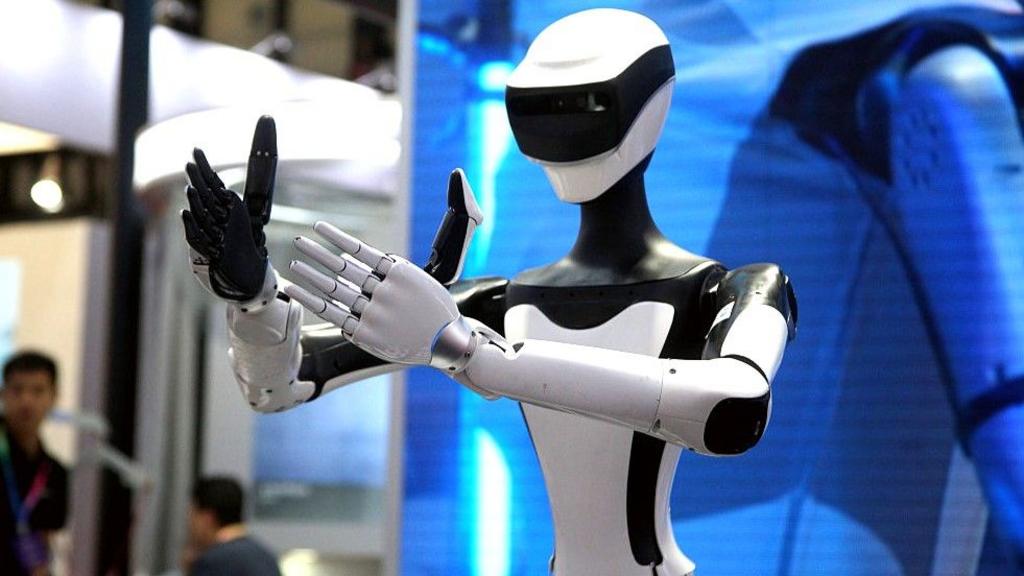
The classic image of a robot, clumsy and jerky in its movements, is on the verge of being relegated to science fiction. In labs and development centers worldwide, a quiet revolution is underway, driven by a seemingly simple yet profoundly complex goal: creating motors that allow robots to move with the fluidity, efficiency, and yes, grace of a living being. This quest is not merely aesthetic; it is the key to unlocking the next generation of robotics, which promises to integrate more naturally into our homes, hospitals, and workplaces. The central question guiding engineers and scientists is: how do we make actuators—the 'muscles' of a robot—more like biological ones? The answer could redefine our relationship with machines.
The technical challenge is monumental. Traditional electric motors, while powerful, are often rigid, energy-hungry, and lack the impact absorption and fine force control that characterize animal movement. To achieve grace, a robot needs actuators that are simultaneously strong, lightweight, energy-efficient, and capable of 'feeling' and adapting to the environment in milliseconds. Startups and tech giants are exploring multiple avenues. One of the most promising is the development of 'soft motors' or 'soft actuators' inspired by musculature, which use materials like electroactive polymers or pneumatic systems to create more organic and safer movements for human interaction. In parallel, advances are being made in high-torque-density electric motors with exquisite force feedback, drastically reducing their size and cost.
Economic data underscores the urgency of this innovation. The global market for robotics motors, valued in the billions of dollars, is growing at an accelerated pace, driven by industrial automation and nascent service robotics. However, the high cost of high-performance actuators remains a critical barrier to mass adoption. 'The motor and its control system can represent up to 30% of the cost of a collaborative robot,' explains Dr. Elena Vargas, a robotics engineer at the Advanced Technology Institute. 'Reducing that cost by half while improving efficiency is not just a business goal; it is the requirement for robots to move out of factories and into our daily lives.'
Statements from industry leaders reflect cautious optimism. 'We are not just seeking to mimic human movement; we are seeking to surpass its limitations with a new physics of efficiency,' says Markus Thiel, CEO of Bionic Drive, a German startup developing modular actuators. 'Our latest prototype reduces energy consumption by 40% compared to a conventional servo motor, enabling quieter and longer-lasting movements.' Meanwhile, from Boston Dynamics, known for the agile Atlas and Spot robots, a spokesperson commented: 'Grace emerges from the perfect integration of hardware and software. Our approach has been to develop control algorithms that compensate for hardware limitations, but the next leap will come from intrinsically more adaptable motors.'
The impact of this evolution will be cross-sectoral. In the industrial realm, more efficient and cheaper robots will accelerate automation, increasing productivity while reducing the energy footprint of factories. In logistics, drones and warehouse robots will be able to operate for more hours with fewer recharges. But the most profound change is foreseen in human-robot interaction. Personal assistants in homes and hospitals, rehabilitation exoskeletons, and advanced prosthetics will require a level of delicacy and safety that only next-generation actuators can provide. A robot that can pick up an egg without breaking it or help an elderly person rise from a chair gently needs a 'grace' built from its fundamental components.
In conclusion, the question 'can robots ever be graceful?' is being answered affirmatively through a convergence of innovations in materials science, electromechanics, and artificial intelligence. The race for more efficient and cheaper motors is, in essence, the race to endow machines with a quality we have always considered exclusively human: economical, adaptive, and harmonious movement. As these advances materialize in commercial products, we will not only change our perception of robots but also open the door to a symbiosis between humans and machines that is more fluid and natural than we ever imagined. The era of the clumsy robot is coming to an end; welcome to the era of the graceful robot.