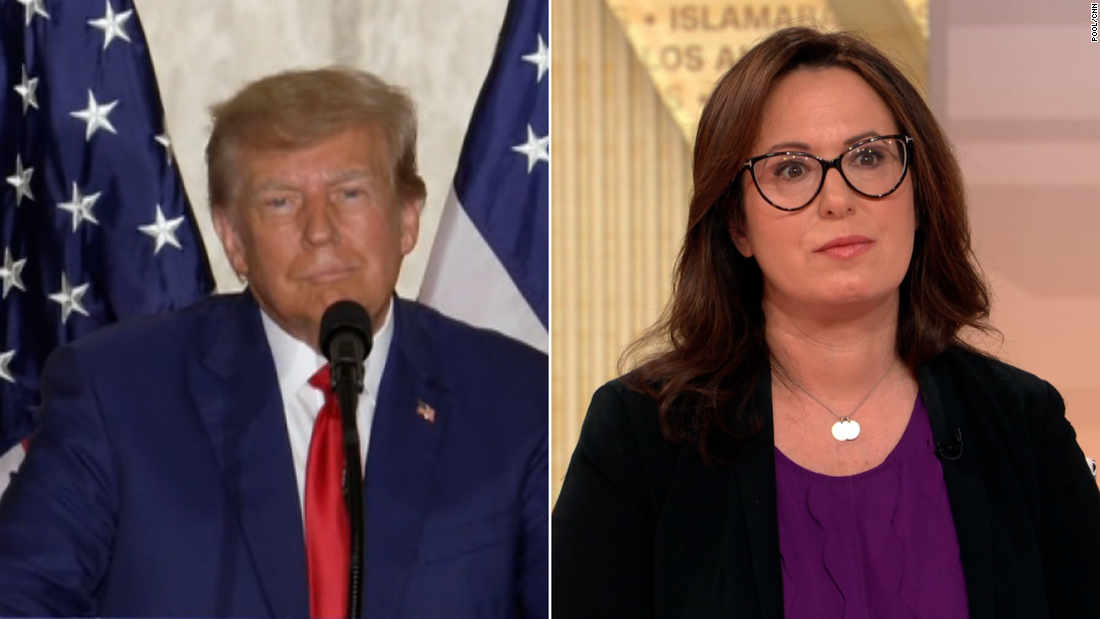
CNN political analyst Maggie Haberman, one of the journalists who has most closely covered Donald Trump's career, has shed light on the vitriolic attacks the former president launched against Judge Juan Merchan and his family during a speech at Mar-a-Lago. According to Haberman, these remarks are not a spontaneous outburst of anger but a calculated tactic central to Trump's legal and political strategy following his arraignment on 34 felony counts of falsifying business records. The explanation fits a pattern of behavior observed for years, in which Trump seeks to personalize and politicize the judicial proceedings against him, shifting the debate from the courtrooms to the public arena.
The context is crucial. Trump delivered these words at his Florida residence hours after appearing in a Manhattan courtroom, where he pleaded not guilty. Before his supporters, he described Judge Merchan as "a conflicted judge" and attacked the magistrate's daughter, linking her professionally to prominent Democrats. For Haberman, this move has a dual objective. First, it seeks to delegitimize the judicial process in the eyes of his support base, sowing doubts about its impartiality and presenting himself as a victim of a political persecution orchestrated by the Democratic Party. Second, it is an attempt to intimidate and exert pressure on the judge himself and future jury members, creating a hostile media environment around the case.
"This is a strategy Trump has employed for decades, first in business and then in politics," Haberman explained during her CNN segment. "When he feels cornered by the system, his instinctive reaction is to attack the figure of authority, personalize the conflict, and mobilize his supporters against that person. It's not just about defending himself in court; it's about winning the battle in public opinion." The journalist, author of the acclaimed biography "Confidence Man," recalled similar episodes during Special Counsel Robert Mueller's investigations and the two impeachment trials, where Trump systematically attacked the prosecutors, witnesses, and lawmakers involved.
The impact of this strategy is multifaceted and deeply polarizing. On one hand, it strengthens the loyalty of his electoral base, which perceives these proceedings as a "witch hunt." On the other, it erodes public trust in judicial institutions and normalizes personal attacks against public servants and their families, crossing an ethical line traditionally respected. Legal experts consulted for this report expressed concern about the chilling effect these statements may have on the administration of justice, potentially deterring ordinary citizens from serving as jurors or even judges from accepting high-profile political cases.
Analysts conclude that these attacks will set the tone for the lengthy legal process ahead. Trump is not expected to moderate his rhetoric; on the contrary, he is likely to intensify it as the trial date approaches and, especially, the November presidential elections. Maggie Haberman emphasized that, for Trump, the legal and electoral fronts are completely fused. Every statement from the Mar-a-Lago podium is, in essence, a campaign rally and a declaration of war against the system judging him. The strategy, although risky and condemned by broad sectors, is consistent with his political identity: that of the outsider fighting a corrupt establishment. The challenge for institutions will be to administer justice with normality in the face of an unprecedented campaign of discredit in the modern history of the United States.