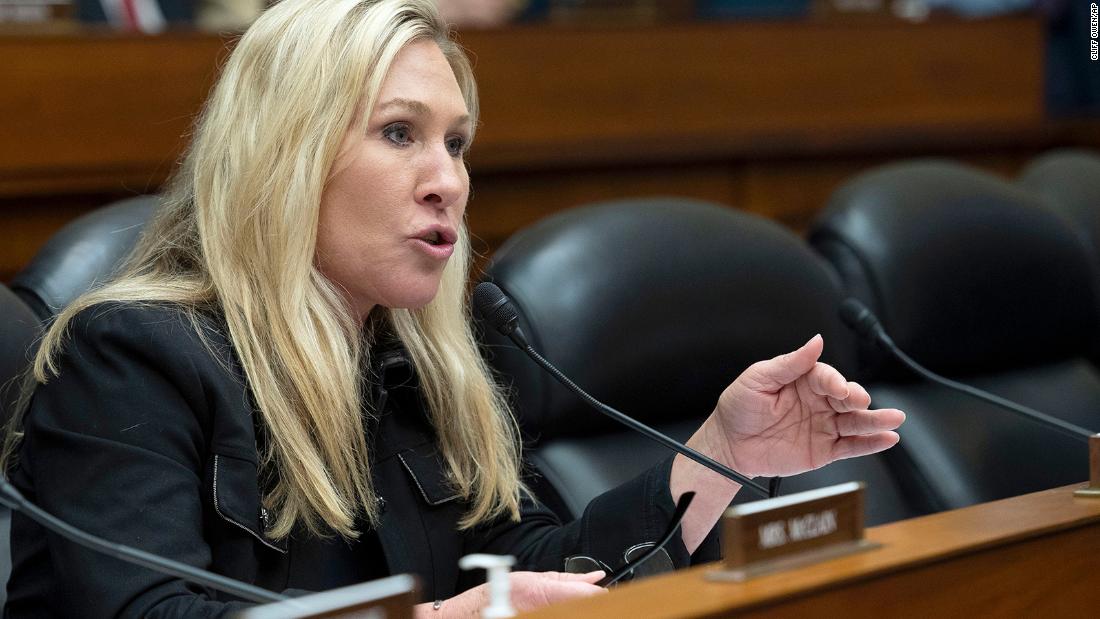
The persistent presence of Georgia Republican Representative Marjorie Taylor Greene in the national spotlight has reignited a fundamental debate about the boundaries of political discourse, the responsibility of the media, and the role of political parties in containing extremist narratives. The most recent episode illustrating this tension occurred last year when Greene delivered a speech at an event organized by Holocaust denier and white supremacist figure Nick Fuentes. Her participation, which was later denounced by Republican leaders, was not an isolated incident but part of a pattern of behavior that tests the foundations of democratic debate.
The context of Greene's appearance at Fuentes's event is crucial to understanding the magnitude of the controversy. Nick Fuentes is a marginal but amplified figure, known for his antisemitic rhetoric, Holocaust denial, and advocacy for an ethno-nationalist vision of America. The fact that an elected member of Congress, with a national platform and a duty of representation, chose to share a stage with such an individual sent shockwaves through the political establishment. The subsequent condemnation by Republican leaders, including Kevin McCarthy and Mitch McConnell, was swift, but it also revealed internal party divisions on how to handle its most controversial members. This incident raises an uncomfortable question: does constant media coverage and the platform given to figures like Greene, even in contexts of condemnation, end up normalizing and amplifying dangerous ideas?
Relevant data paints a concerning picture. According to a report from the Counter-Extremism Project, political figures who use incendiary rhetoric or associate with fringe groups see a significant increase in small-donor fundraising and social media engagement following media controversies. This 'controversy boost' creates a perverse incentive. Furthermore, a study by the Center for the Study of Hate and Extremism noted that public speeches by political figures using dehumanizing or conspiratorial language are correlated with an increase in threats and political violence at the local level. Representative Greene, with millions of social media followers, possesses a mobilization capacity that transcends the isolated event with Fuentes.
Statements following the event were eloquent in their disparity. Senate Minority Leader Mitch McConnell stated, 'There is no place in the Republican Party for antisemitism or QAnon conspiracy theories.' For her part, Greene, in statements to friendly media, downplayed her prior knowledge of Fuentes's positions and defended her right to 'talk to all Americans.' This defense, however, clashes with Fuentes's well-documented record and the explicit nature of his event. The lack of significant party consequence beyond verbal condemnation has been noted by analysts as a sign of parties being captured by the logic of media attention and a radicalized electoral base.
The impact of providing an uninterrupted platform to such figures is multifaceted and profound. First, it erodes the institutional norms of Congress, where debate is supposed to be based on facts and the public interest. Second, it contributes to the poisoning of the information ecosystem, where conspiracy theories and hate speech gain an appearance of legitimacy by being uttered by an elected representative. Finally, and perhaps most dangerously, it desensitizes the public. The constant repetition of similar scandals can lead to audience fatigue and a gradual normalization of ideas that were once outside the bounds of acceptable political discourse. This represents a clear risk to social cohesion and the safety of minority communities, which are frequent targets of this rhetoric.
In conclusion, the case of Marjorie Taylor Greene transcends partisan politics and becomes a case study on the challenges facing democracy in the digital age. The condemnation from Republican leaders, while necessary, is insufficient if not accompanied by institutional mechanisms within the party and Congress to clearly delineate what is acceptable. The media faces the difficult task of reporting on disruptive figures without becoming vehicles for gratuitous amplification. The central question is not whether Greene has a right to her opinions, but what responsibility democratic institutions, political parties, and the press have in preventing a platform designed for governance from being used to legitimize hate and disinformation. The health of America's public discourse depends on how this challenge is met in the coming years.