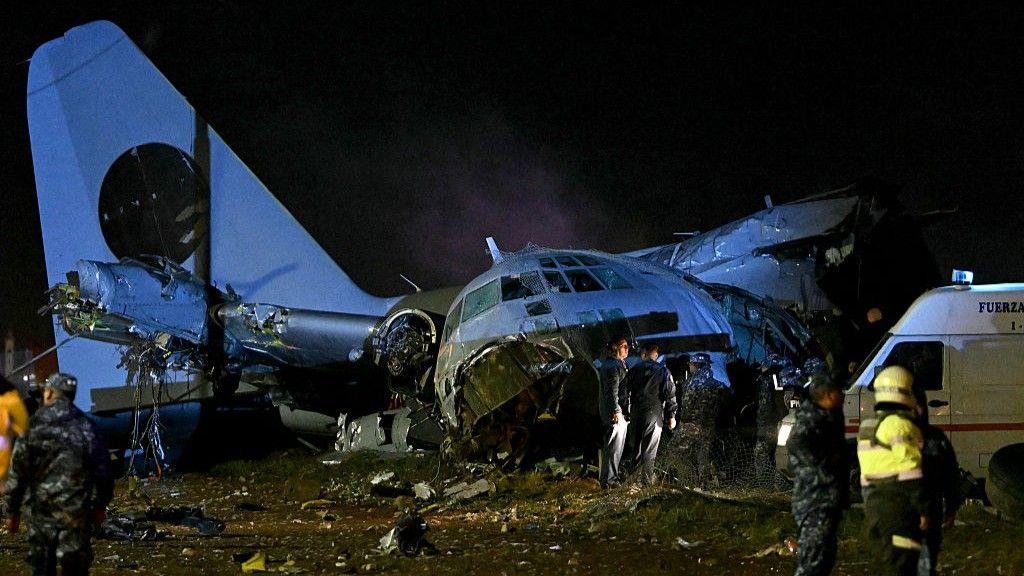
An air tragedy shook Bolivia on Thursday when a military transport plane crashed in a mountainous area of the La Paz department, resulting in a preliminary death toll of at least eleven people. The aircraft, a C-130 Hercules cargo plane belonging to the Bolivian Air Force (FAB), was conducting a logistical flight from the city of La Paz to the Beni region, carrying an unusual and high-value cargo: a significant amount of legal tender banknotes destined to supply banks in the northern part of the country. The accident occurred in the early morning hours near the town of Puerto Rico, in the municipality of Ixiamas, a hard-to-reach area characterized by dense vegetation and rugged terrain.
Bolivian authorities confirmed that the plane was carrying both military personnel and officials from the Central Bank of Bolivia (BCB), tasked with guarding the monetary shipment. President Luis Arce, through his social media, expressed his condolences to the victims' families and ordered the immediate deployment of all necessary resources for rescue operations and the investigation of the crash. "I deeply regret the loss of life in this tragic accident. I have given instructions for the Armed Forces and the Ministry of Defense to mobilize all means to attend to this emergency and determine the causes of what happened," the president declared. Defense Minister Edmundo Novillo reported that a crisis committee has been activated and that rescue teams, including units from the FAB and SAR-Bolivia (Search and Rescue), are working at the site, although weather conditions and geography are significantly complicating operations.
The context of this flight falls within a routine cash redistribution operation carried out by the Central Bank to ensure liquidity in remote regions of the country. Bolivia, with vast areas of difficult land connectivity, heavily depends on military air transport for this type of financial logistics. The Hercules C-130 is an aircraft renowned for its robustness and widely used for heavy cargo missions worldwide; however, the Bolivian fleet has faced criticism in the past for its age and maintenance issues. This incident will undoubtedly reignite the debate about the state of military aviation and the safety of state air operations. This is not the first time an FAB plane has suffered a fatal accident on internal transport missions, highlighting the need for an urgent modernization of the fleet.
The impact of the accident transcends the human aspect and extends into the economic and logistical realms. In addition to the loss of life, the destruction of the banknote shipment represents an operational and accounting challenge for the Central Bank, which will have to manage the cancellation of the destroyed monetary series and reorganize the cash supply for the Beni region, potentially affecting local commercial activity in the short term. The Armed Forces have established a security perimeter around the crash site, not only to preserve the scene for investigators but also to prevent looting or misappropriation of the scattered banknotes, many of which may have remained intact. The State Attorney General's Office has already announced that it will open an investigation to determine whether there was negligence or technical failures that led to the disaster.
In conclusion, this tragic air accident in Bolivia leaves a deep wound in the country, combining an irreparable human loss with complex logistical and national security implications. It underscores the inherent risks of air operations in complex geographies and places the maintenance and safety protocols of military aviation under scrutiny. As the victims' families receive support from the state and authorities focus on rescue efforts and recovery of the remains, the Bolivian nation unites in mourning and reflects on the necessary measures to prevent a tragedy of this magnitude from happening again. The technical investigation will be crucial to provide answers and, hopefully, to implement changes that strengthen air safety in the future.