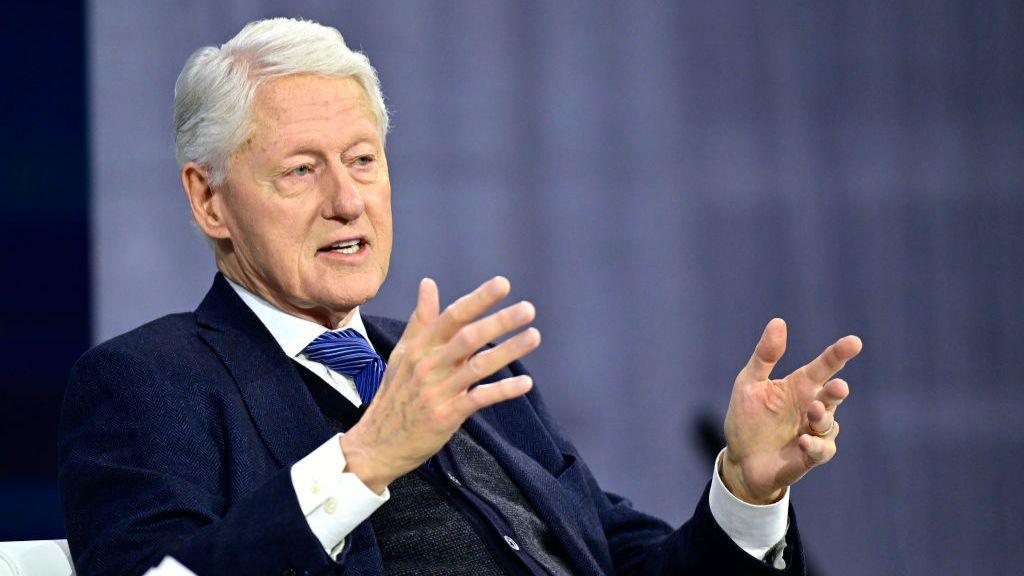
In a statement that has captured international media attention, former U.S. President Bill Clinton has testified under oath that he had no knowledge of the sexual crimes committed by financier Jeffrey Epstein. This declaration comes amid renewed controversy over a 2002 photograph showing Clinton in a hot tub on Epstein's private island, Little St. James, known to be the epicenter of the late magnate's criminal activities. The image, which has circulated widely on social media and news outlets, has reignited debate about the extent of relationships between high-profile political figures and Epstein's circle.
The context of this statement dates back to legal proceedings stemming from the charges against Epstein, who was convicted in 2008 for soliciting prostitution from a minor and later arrested in 2019 for sex trafficking of minors, before dying in his cell under circumstances still under investigation. Clinton, who has acknowledged traveling on Epstein's private jet on multiple occasions between 2002 and 2003, has consistently maintained that his interactions with the financier were limited to philanthropic purposes and that he cut all ties after Epstein's first conviction. However, the hot tub photo, taken during one of those visits, has raised questions about the nature of those encounters.
In his most recent testimony, Clinton was specifically questioned about whether he was aware of Epstein's illegal activities during the period they were in contact. "I knew nothing about the crimes that Jeffrey Epstein committed," the former president declared, emphasizing that had he had any suspicion, he would have severed all relations immediately. This assertion aligns with previous statements from his spokesperson, who has noted that Clinton has not visited Little St. James Island in over two decades and regrets any association with Epstein. Despite this, critics and political analysts question how a figure with the intelligence resources of a former president could remain unaware of red flags about Epstein, whose behavior was already under investigation at the time.
The impact of these revelations transcends the personal, affecting public perception of accountability in power circles. The hot tub photo, in particular, has been used by conspiracy theorists and sensationalist media to suggest deeper complicity, though there is no evidence linking Clinton directly to Epstein's crimes. Legal experts stress that mere association does not constitute guilt, but admit that the physical and social proximity illustrated in the image fuels legitimate doubts about ethics in elite relationships. This case also highlights the challenges in investigating abuse networks involving influential individuals, where access and opacity often hinder justice.
In conclusion, while Bill Clinton maintains his stance of ignorance about Epstein's crimes, the persistence of images like the hot tub one ensures this chapter remains under scrutiny. The story serves as a grim reminder of how high-profile associations can shadow legacies, even decades later, and underscores the need for transparency in interactions between public figures and people later convicted of serious crimes. As investigations into Epstein's network continue, more details are likely to emerge, but for now, Clinton's testimony adds another layer to a scandal that has already shocked the world.