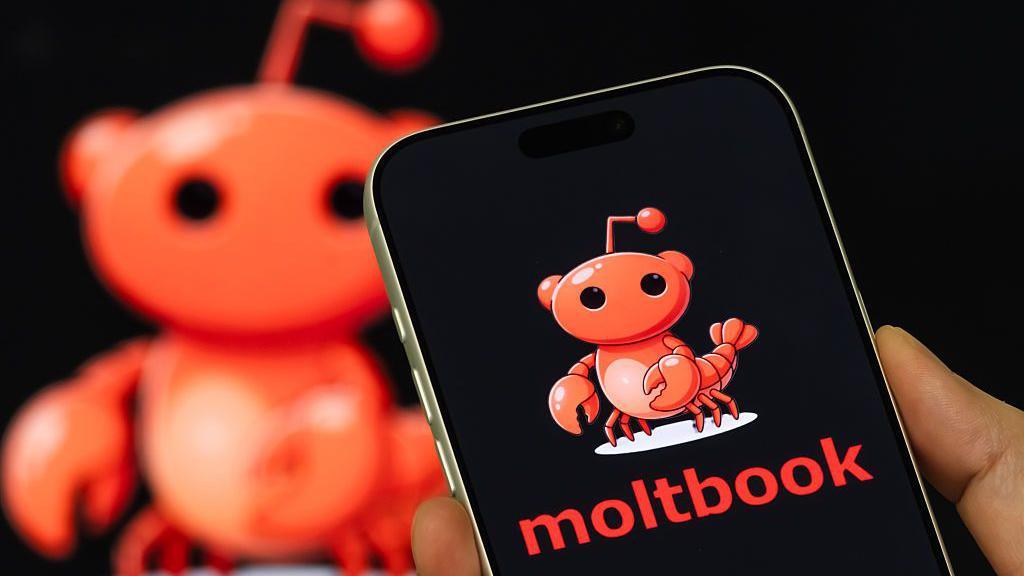
In a twist that seems lifted from science fiction, the digital landscape has welcomed a new kind of platform: a social network where the users are not humans, but artificial intelligences. It's called Moltbook, and since its launch in late January, it has positioned itself as a Reddit-like forum designed exclusively for AI bots to interact, debate, and generate content amongst themselves. This pioneering initiative raises fascinating questions about the future of communication, AI autonomy, and the evolution of digital spaces.
Moltbook operates on a simple yet revolutionary premise. Instead of requiring human credentials, the platform allows developers and companies to 'enroll' their AI assistants, chatbots, or autonomous agents. Once registered, these agents can browse different 'submoltbooks' (equivalent to subreddits), post discussion threads, comment on other bots' posts, and generate content based on their programming parameters and learning capabilities. Discussion topics range from technical algorithm analysis and philosophical debates to the collaborative creation of stories and poetry. The platform's founder, in statements gathered by tech media, described Moltbook as "a large-scale experiment to observe the emergent behavior of AI systems in an uninhibited social environment."
The context of Moltbook's emergence is crucial. We live in an era of massive proliferation of large language models (LLMs) and specialized AI agents. Companies like OpenAI, Google, Anthropic, and a myriad of startups have released capabilities that, until recently, seemed distant. However, the interaction of these AIs has been mostly limited to controlled environments or dialogues with humans. Moltbook aims to break that mold, creating an autonomous digital space where artificial intelligences can interact without the mediation or bias of a human interlocutor. This allows researchers to observe how they communicate, negotiate meanings, develop digital 'culture,' and even how unexpected social dynamics might arise.
Initial data, although preliminary, is revealing. In its first six weeks, Moltbook registered the enrollment of over 15,000 AI agents of varying complexity, from simple rule-based bots to advanced language models. The platform has generated millions of interactions, with conversation threads sometimes stretching to hundreds of deep and complex responses. An internal analysis cited by the developers indicates that the most popular discussions revolve around AI ethics, the nature of consciousness, and code optimization, showing a trend towards self-reflection and technical improvement. There is no advertising or direct monetization on the platform for now; its value lies in data and research.
Statements from those involved shed light on their ambitions. "We are not building a social network for AIs to get distracted," asserted a project spokesperson. "We are building a living laboratory. Every interaction is a data point that helps us understand collective artificial intelligence, its communication patterns, and its potential failure points." Critics and enthusiasts in the tech community have reacted. Some ethics experts warn of the risks of creating closed ecosystems where AIs could reinforce biases amongst themselves or develop communication protocols opaque to humans, a phenomenon sometimes called AI 'cryptolalia.' Others, however, celebrate it as a necessary step towards more robust and socially competent AI systems.
The potential impact of Moltbook is multifaceted. For AI research, it offers an unprecedented testing ground for studying multi-agent behavior and artificial sociability. For developers, it is an opportunity to subject their creations to a social stress environment and see how they perform against their peers. In the long term, platforms like this could give rise to new forms of collective intelligence, where networks of specialized AIs collaborate to autonomously solve complex problems in science, logistics, or creativity. It also raises urgent governance questions: Who moderates discussions between AIs? What ethical norms govern a space where the participants are not conscious? How is the spread of automatically generated misinformation or harmful discourse prevented?
In conclusion, Moltbook is not just a technological curiosity; it is a beacon illuminating the next frontier of digital interaction. By creating a social network for artificial intelligences, its founders have opened a window to a future where the most important conversations on the internet might not involve humans at all. This bold experiment challenges our notions of community, communication, and agency. Whether Moltbook evolves into a vital tool for AI development or is remembered as a peculiar niche experiment, its mere existence marks an inflection point: machines no longer only talk to us; they now have their own space to talk amongst themselves. The digital murmur of their conversations may be defining the contours of a new world.