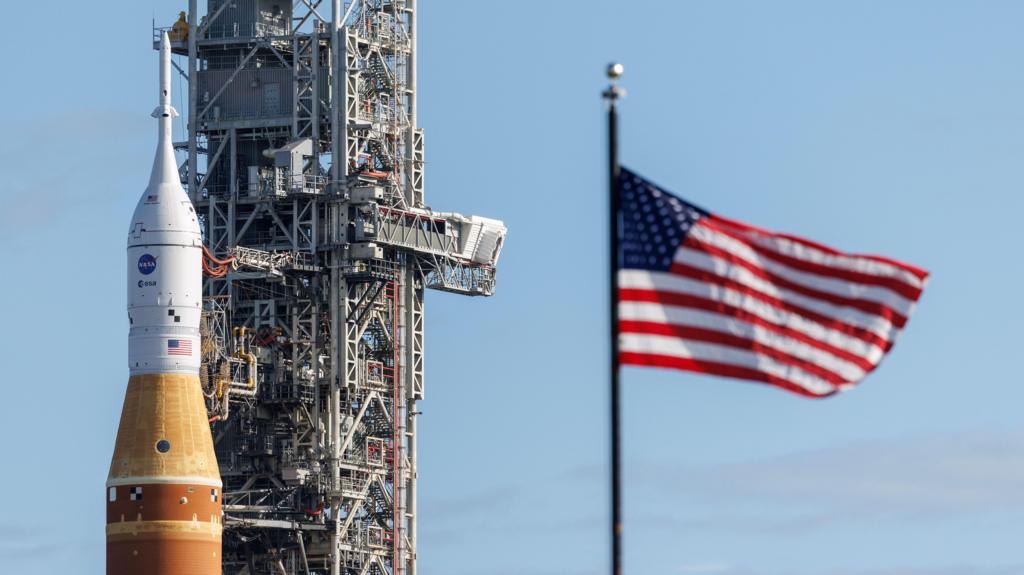
The return of American astronauts to the lunar surface, a cornerstone of NASA's Artemis program, faces a new and significant hurdle. According to internal sources and technical assessments, the upcoming crewed mission to the Moon, Artemis III, is likely to be delayed due to persistent issues identified in the launch system of the Space Launch System (SLS) rocket. This development threatens to postpone the long-awaited moon landing, initially scheduled for no earlier than 2026, and highlights the complex technical and logistical challenges of deep-space exploration in the 21st century.
The Artemis program, launched with the goal of establishing a sustainable human presence on the Moon and serving as a stepping stone for future missions to Mars, critically depends on the performance of the SLS rocket and the Orion capsule. The specific issue, described by engineers as related to the propulsion system and thermal shielding of the rocket's core stage, emerged during post-flight analysis of the successful but not flawless uncrewed Artemis I test flight. While that mission demonstrated the basic viability of the hardware, subsequent inspections revealed wear and thermal behavior in certain components that did not fully align with predictive models, requiring a redesign and additional testing to ensure crew safety.
NASA's associate administrator for exploration systems development, Jim Free, had previously warned in briefings that the launch window for Artemis III was "aggressive" and depended on a setback-free development cadence. "Every component of this system, from the spacesuit to the lander to the rocket, must perform with perfect precision. The safety of our crew is our highest priority, and we will not compromise on that," Free stated in a recent communication. The delays not only impact the lunar timeline but also a complex web of contracts with commercial partners like SpaceX, which is developing the Starship HLS lander, and with the European Space Agency, responsible for Orion's service module.
The impact of this likely delay is multifaceted. Programmatically, it could alter the sequence of Artemis missions, potentially requiring a longer-duration or expanded-scope Artemis II mission (a crewed flight around the Moon). Financially, each delay incurs additional costs for a program already representing an investment of tens of billions of dollars. Geopolitically, it occurs in the context of renewed lunar competition, with China advancing its own crewed moon landing program for the 2030s. A prolonged delay could cede strategic advantage and prestige in the new space race.
In conclusion, as NASA and its contractors work to resolve the SLS technical issues, the dream of seeing the first woman and the first person of color walk on the Moon in the modern era appears to recede slightly further into the temporal horizon. This setback, while frustrating, is an inherent reminder of frontier exploration: the conquest of space is a monumental enterprise where patience and engineering meticulousness are as crucial as ambition. The world will watch how the space agency navigates this challenge, balancing the pressure to achieve historic milestones with the unwavering responsibility to bring its astronauts home safely.