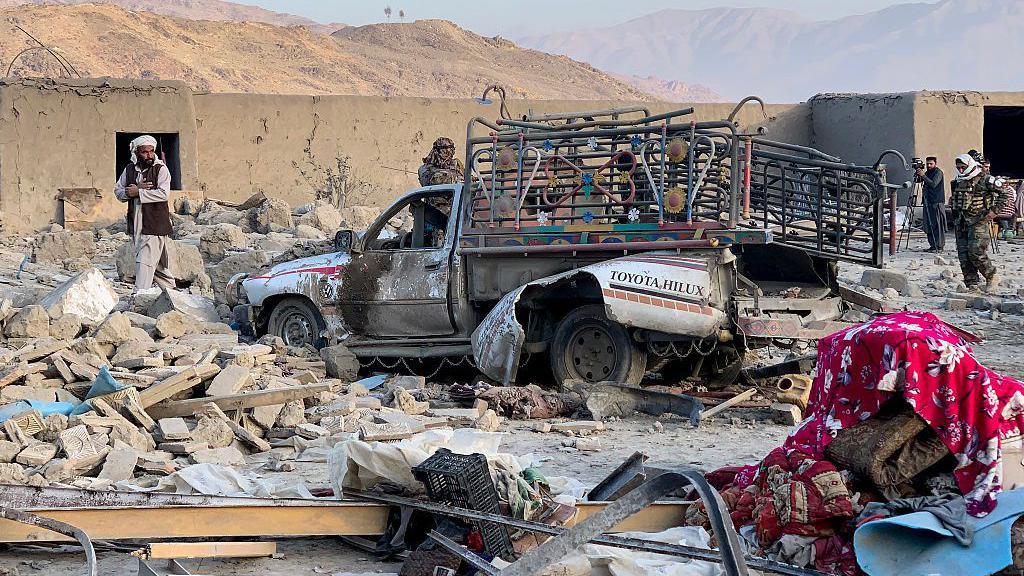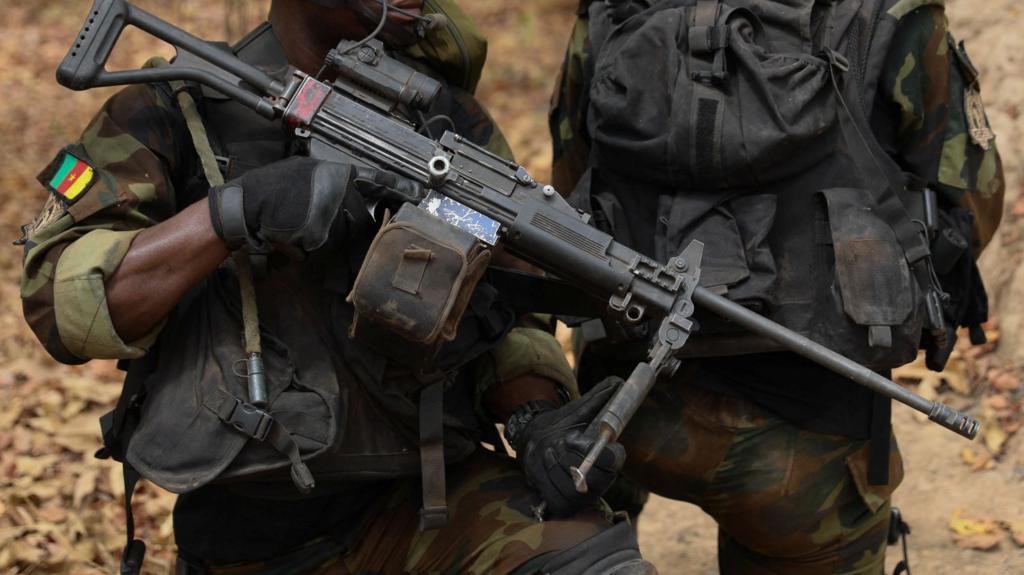
A military tribunal in Cameroon has handed down historic prison sentences to five soldiers for their involvement in the killing of 21 civilians, including women and children, in an incident that shocked the nation and put the conduct of security forces in the conflict-ridden Anglophone region under scrutiny. The events, which took place in February 2020 in the village of Ngarbuh in the Northwest Region, were initially denied by authorities, who attributed the deaths to a clash between separatists and self-defense militias. However, a subsequent investigation, pressured by international organizations and compelling evidence, revealed the true nature of the tragedy.
The context of this case lies within the long-standing conflict between government forces and separatist groups in Cameroon's Anglophone Northwest and Southwest Regions. Since 2017, the conflict has claimed thousands of lives and displaced over 700,000 people, with widespread allegations of abuses by both sides. The Ngarbuh incident became a turning point due to its brutality and the initial efforts to cover it up. According to reports from human rights organizations, the soldiers, alongside allied militiamen, stormed the village, shot residents, and set houses on fire, resulting in the deaths of 13 children and an infant, among other victims.
Judicial data reveals that the five convicted soldiers received sentences ranging from 10 years in prison to life imprisonment. A sergeant, identified as the main perpetrator, was sentenced to life in prison, while four others received sentences of 10 to 15 years. Additionally, the court ordered the payment of compensation to the victims' families, an uncommon gesture in local jurisprudence. These sentences are exceptional in a conflict where impunity has been the norm, and represent one of the few cases where members of the security forces have been brought to justice for crimes against civilians.
Statements from key actors have highlighted the importance of this ruling. "This sentence sends a clear message that war crimes will not be tolerated, even in the context of a complex conflict," stated a spokesperson for Amnesty International in the region. Meanwhile, Cameroon's Minister of Communication, René Emmanuel Sadi, declared that the verdict "demonstrates the state's commitment to the rule of law and the protection of civilians." However, local human rights organizations have expressed caution, noting that many other cases of abuses remain uninvestigated and that military justice may not be fully independent.
The impact of these sentences is multifaceted. Nationally, it could help restore some trust in judicial institutions among communities affected by the conflict. Internationally, it improves Cameroon's image, which has faced criticism from the UN and the African Union for its handling of the crisis. Nonetheless, the real challenge will be ensuring that this case is not an exception, but the start of a broader accountability process. The persistence of the conflict, with ongoing clashes and abuses, suggests that the path to justice and peace remains long and arduous.
In conclusion, the sentences against Cameroonian soldiers for the Ngarbuh massacre set a significant precedent in the fight against impunity in the Anglophone conflict. While they represent an important symbolic advance, their real effectiveness will depend on the government's ability to systematically investigate and prosecute all abuses, regardless of the perpetrators. The tragedy of Ngarbuh has left a deep scar on Cameroonian society, and only consistent and transparent justice can begin a process of healing and reconciliation in a country fractured by years of violence.