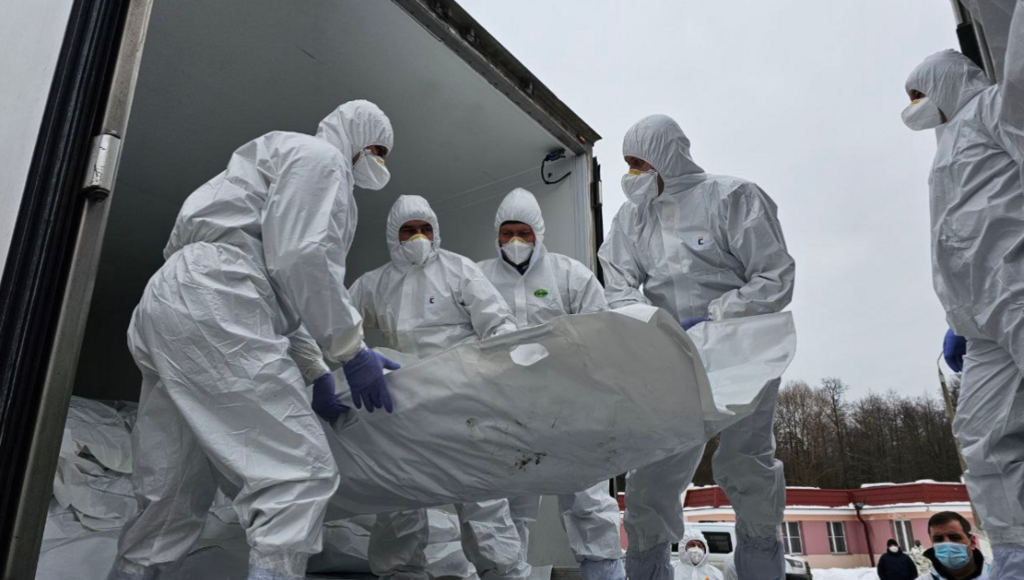
In a move blending humanitarian protocol with the grim reality of conflict, Russia's Investigative Committee announced on Thursday the handover of the bodies of approximately 1,000 deceased Ukrainian soldiers. The operation, described by Russian authorities as an act of "goodwill," was carried out through bilateral channels and marks one of the largest repatriations of remains since the start of the full-scale invasion in February 2022. This development occurs amidst a stalemate on the battlefield and intense fighting in regions like Donetsk and Kherson, where casualties continue to mount daily.
The process of exchanging prisoners and mortal remains has been a constant, though irregular, line of communication between Kyiv and Moscow, often mediated by third countries or organizations like Turkey or the International Committee of the Red Cross. However, the scale of this specific handover is notable. According to the official Russian statement, the bodies were transferred to Ukrainian-controlled territory following a "laborious identification process" conducted by Russian forensic experts. The timeframe during which these soldiers died, or the exact circumstances of their deaths, were not specified, leaving a crucial information gap for the affected families.
The response from Ukraine has been cautious. While the Ministry for Reintegration of the Temporarily Occupied Territories confirmed receiving a significant number of remains, it stopped short of confirming the exact figure of 1,000, underscoring the complexity and time required for definitive forensic identification by its own teams. "Every return is a step towards closure for a family," a ministry spokesperson stated, adding that the work to name each fallen soldier continues. International analysts note that these repatriations, beyond the humanitarian aspect, also serve as a propaganda tool for both sides, seeking to project an image of civility amidst mutual accusations of war crimes.
The human impact of this action is profound and immeasurable. For hundreds of Ukrainian families, it represents the end of agonizing uncertainty, allowing for mourning and the possibility of a dignified burial. Human rights organizations have highlighted the importance of adhering to International Humanitarian Law protocols, which oblige parties in a conflict to facilitate the recovery and identification of the deceased. Nevertheless, it is estimated that thousands of soldiers from both sides remain officially missing, a somber reminder of the ferocity and attrition characterizing this war. The logistics behind such operations are monumental, requiring fragile coordination amid active hostility.
In conclusion, the mass handover of remains by Russia is a significant episode within the ongoing tragedy of the war. It underscores the immense human cost the conflict continues to exact, while highlighting the limited, yet existing, channels for humanitarian interaction. As the war grinds on with no visible end, gestures like this, regardless of their political motivations, offer a minimum of solace amidst widespread grief. However, they also serve as a stark reminder that, until a lasting peace is achieved, the number of families waiting for news of their loved ones can only continue to grow.