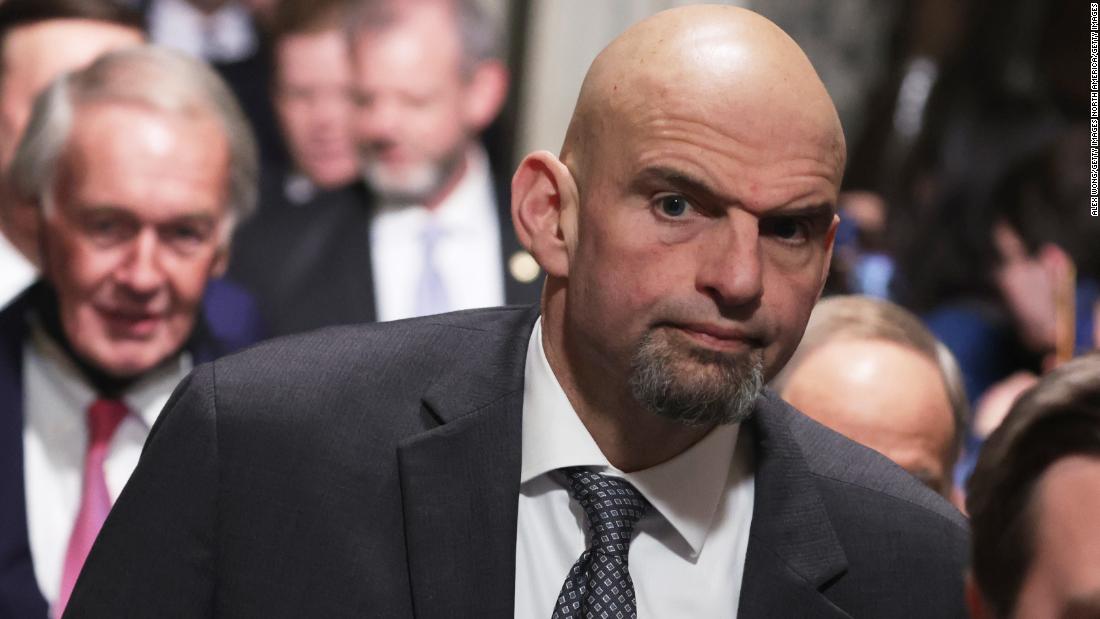
In a deeply personal interview with CBS News, Pennsylvania Democratic Senator John Fetterman has broken his silence about his struggle with severe clinical depression, an episode that began shortly after his victory in the tight 2022 Senate election. His testimony sheds light on the intersection between mental health and the demands of high-level public service, challenging the stigmas that still persist in the political sphere. Fetterman, whose campaign was marked by his recovery from a stroke, describes how the post-election period, far from being a time of celebration, spiraled into a descent of hopelessness and isolation.
The context of Fetterman's revelation is crucial. His 2022 victory was a key political milestone for Democrats, securing a crucial Senate seat. However, behind the public facade of triumph, the senator was facing an internal crisis. "Winning the biggest election of my life, and then hitting rock bottom... it was an overwhelming contradiction," Fetterman recounted in the interview. He explained that feelings of inadequacy and the crushing weight of responsibility took hold of him, compounded by the physical and cognitive aftermath of his stroke. This moment of vulnerability occurred in a political environment often characterized by a facade of invincibility.
Relevant data underscores the importance of his statement. According to the National Alliance on Mental Illness (NAMI), approximately one in five adults in the United States experiences mental illness each year. However, in high-pressure, high-visibility professions like politics, the rate of seeking treatment can be significantly lower due to fear of public judgment and the perception of weakness. Fetterman's case adds to a small but growing number of elected officials, like Congresswoman Susan Wild and former Senator Ben Cardin, who have spoken openly about their mental health challenges, helping to normalize these conversations.
In his statements to CBS, Fetterman was unequivocal in describing his experience. "This wasn't just about feeling 'sad.' It was an inability to find joy in anything, not even my own family or the job I had fought so hard for," he stated. He detailed his decision to check into Walter Reed National Military Medical Center in Bethesda in February 2023 for inpatient treatment for clinical depression, a decision he made with the support of his family and staff. "Admitting I needed help was, in itself, a monumental step. In politics, you're trained to project strength, not vulnerability," he confessed.
The impact of his testimony is multifaceted. On a personal level, it marks a crucial chapter in his ongoing recovery. Professionally, it humanizes the figure of a United States Senator and may foster a culture of greater compassion and understanding within Congress. On a societal level, his platform has the power to reach millions of Americans who may be silently struggling with similar issues, sending a powerful message that seeking help is a sign of strength, not weakness. Mental health advocacy organizations have already praised his bravery, highlighting how such visibility can save lives by reducing stigma.
In conclusion, Senator John Fetterman's revelation transcends mere political news. It represents a significant cultural moment in the national conversation about mental health, particularly in high-performance environments. By sharing his story from a position of power, Fetterman is not only paving the way for his colleagues in public service but is also offering a powerful beacon of hope for the general public. His journey underscores a universal truth: professional success and personal struggle are not mutually exclusive, and the path to healing often requires the courage to openly confront our most difficult battles. His story is an urgent reminder that mental well-being must be a priority, regardless of the office or stature one holds.