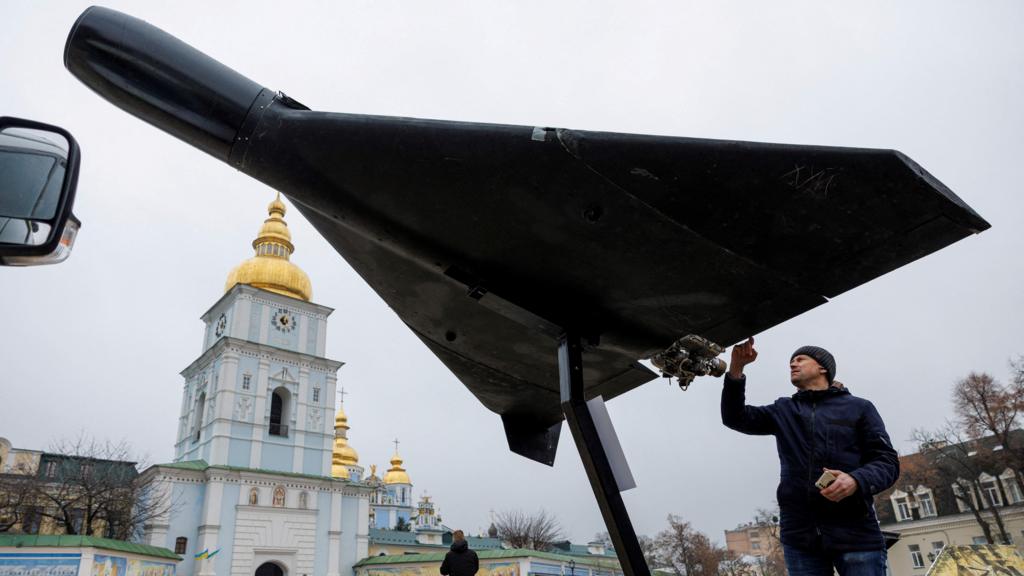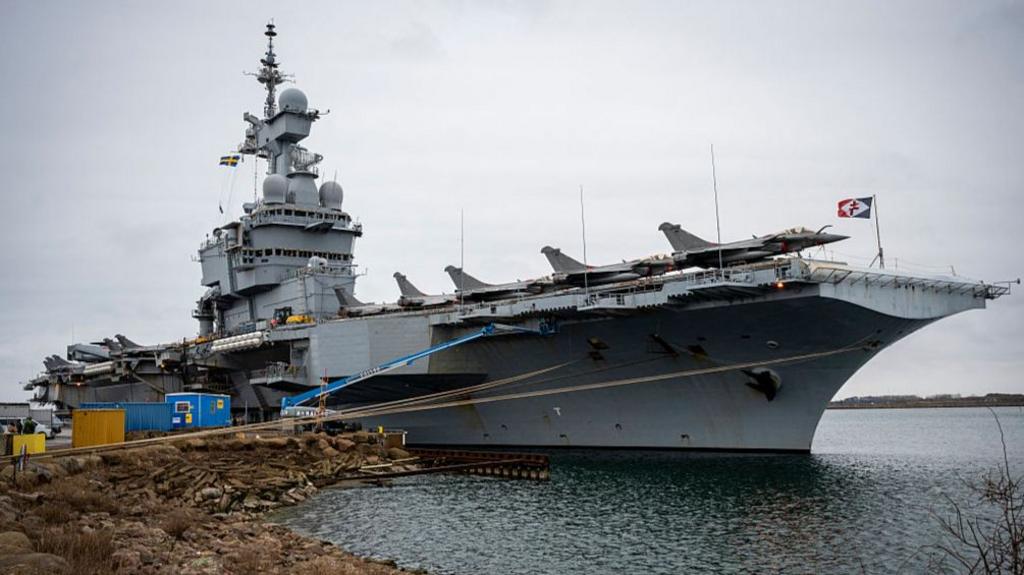
Swedish authorities have revealed a new dimension in electronic warfare in the Baltic, stating that a reconnaissance drone that experienced interference while operating near the French aircraft carrier Charles de Gaulle earlier this year was likely targeted by a Russian signal-jamming attack. The incident, which took place in February during a naval exercise in the Baltic Sea, underscores the growing sophistication and frequency of electronic warfare operations in Europe's strategic regions, where tensions have risen significantly since Russia's invasion of Ukraine in 2022. The drone, operated by Swedish defense manufacturer Saab, was conducting a surveillance demonstration for the French Navy when its data link was jammed, leading to a loss of control and its eventual crash into the sea.
The context of this event is crucial. The Baltic Sea has become a hotspot for military and intelligence activity. The region is home to several NATO members and close partners like Sweden, which recently joined the alliance. The presence of the French flagship carrier, the Charles de Gaulle, was part of broader exercises aimed at projecting force and demonstrating NATO cohesion. Jamming unmanned assets in the vicinity of a capital ship from a NATO member represents a significant escalation in non-kinetic provocation tactics, designed to test defenses and gather information on responses without crossing the threshold of open armed conflict.
According to a report from the Swedish Security Service (Säpo) and the counterintelligence authority MUST, the jamming pattern and signals intelligence data strongly point to a Russian origin. "The method and intensity of the jamming are consistent with known capabilities and previous operational tactics of Russian forces in the Baltic," stated a senior Swedish defense official on condition of anonymity. Jamming technology, which overwhelms the radio frequencies used to control drones, is a common tool in the modern electronic warfare arsenal. Russia has deployed advanced systems like the Krasukha and Murmansk-BN, capable of disrupting communications and radar signals over long distances.
The impact of this incident is multifaceted. Firstly, it highlights the vulnerability of unmanned aerial systems, even those used by technologically advanced nations, to electronic countermeasures. Secondly, it further erodes the already fragile confidence and security measures between Russia and Western states, increasing the risk of miscalculation or unintended escalation. Finally, it serves as a wake-up call for NATO forces to strengthen the electronic resilience of their systems and develop protocols for operating in electromagnetically contested environments. NATO's response has been one of cautious condemnation, with an alliance spokesperson noting that "any deliberate interference with allied assets in international space is unacceptable and undermines regional security."
In conclusion, the jamming of the Swedish drone near the Charles de Gaulle is not an isolated incident but part of a broader pattern of Russian gray-zone and hybrid activities aimed at destabilizing and probing NATO. As Sweden fully integrates into the alliance's defense structures, intelligence sharing on such incidents becomes vital. This event reinforces the need for enhanced electronic warfare cooperation, investment in spectrum-resilient technologies, and a clear deterrent posture to defend international air and maritime norms. The Baltic remains a testing ground for great-power competition, where silent battles for control of the electromagnetic spectrum are fought daily, shaping the security landscape of tomorrow.