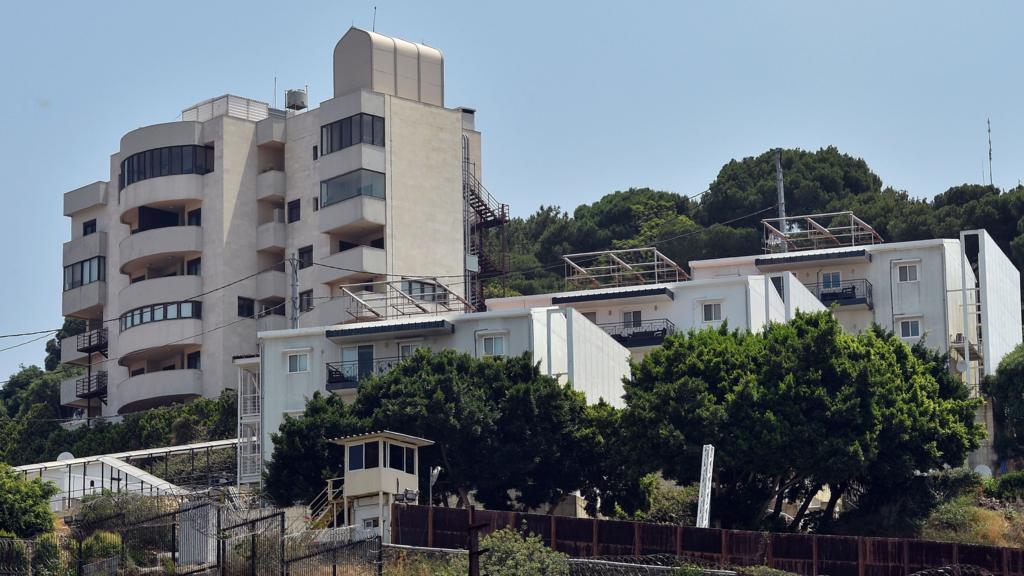
In a move reflecting growing security concerns in the region, the United States government has ordered the partial evacuation of its embassy in Beirut, Lebanon. The measure, confirmed by the State Department, affects non-essential personnel and family members of diplomats, and comes amid a marked increase in tensions between Washington and Tehran, as well as an escalation of violence on the Lebanon-Israel border. U.S. authorities have cited "an abundance of caution" due to the unpredictable security situation, urging American citizens in Lebanon to maintain a high level of vigilance and reconsider non-essential travel to the country.
The context for this decision is set against a period of extreme volatility in the Middle East. Since the onset of the Israel-Hamas conflict in Gaza, Iran-backed militias, such as Hezbollah in Lebanon and groups in Iraq and Yemen, have increased their attacks against Israeli and U.S. interests. Cross-border fire between Israel and Lebanon has been nearly daily, with Hezbollah launching rockets and drones, and the Israeli Air Force responding with airstrikes. This scenario has fueled fears of a full-scale war that could drag in multiple regional actors. The U.S. embassy in Beirut, a symbol of the American presence in a historically fragile nation, thus becomes a potential target for groups seeking retaliation for Washington's support of Israel.
Relevant data indicates this is not the first time the embassy has reduced its staff. In 2023, there were temporary evacuations due to mass protests. However, the current order appears more substantial and directly linked to military threats. According to analysts, Lebanon is home to more than 250,000 Palestinian refugees and is the main stronghold of Hezbollah, an organization designated as a terrorist group by the U.S. and with an estimated arsenal of 150,000 rockets and missiles. The embassy's proximity to potential conflict zones makes it particularly vulnerable. A State Department spokesperson, speaking on condition of anonymity, stated: "Our priority is always the safety of our personnel and their families. We are monitoring the situation hour by hour and are in coordination with Lebanese authorities."
The impact of this evacuation is multifaceted. Diplomatically, it temporarily weakens the embassy's operational capacity at a critical time for mediation and assistance. For Lebanon, already mired in a deep economic and political crisis, it sends a negative signal about the country's stability, possibly affecting investor and international partner confidence. For the Lebanese population, it reinforces fears of a military escalation that could further devastate their infrastructure. Regionally, the move is interpreted as U.S. preparation for possible retaliation following recent increased sanctions against Iran and Israeli airstrikes on Iranian targets in Syria.
In conclusion, the partial evacuation of the U.S. embassy in Beirut is a clear barometer of the dangerous escalation in the Middle East. It underscores how tensions between major powers, filtered through proxy actors, can force extreme protective measures that, in turn, fuel the perception of imminent conflict. While diplomatic talks attempt to contain the situation, the U.S. military presence in the region remains on high alert. The international community watches with concern, aware that a miscalculation or a significant attack could trigger a confrontation with unpredictable consequences for an already turbulent region. The safety of diplomatic personnel is paramount, but their withdrawal also leaves a void in a place where dialogue is more needed than ever.