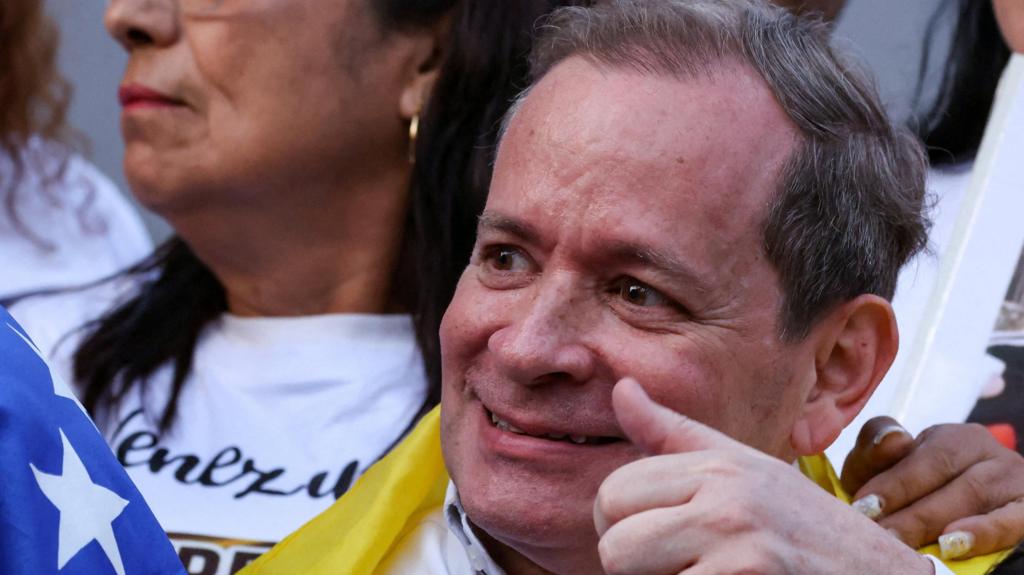
In a significant turn within Venezuela's complex political landscape, a prominent opposition politician has been released from prison following the enactment of a new amnesty law passed by the National Assembly. This event marks a potential inflection point in the tensions that have characterized the relationship between President Nicolás Maduro's government and opposition sectors for years. The release occurs amid exploratory dialogues and renewed international pressure, generating cautious expectations about a possible détente in the Caribbean nation.
The released politician, whose identity has been confirmed by human rights organizations and his party, had been detained under charges that the opposition and international observers labeled as politically motivated. His case had become a symbol of what critics call the criminalization of dissent in Venezuela. The new amnesty law, pushed forward after intense negotiations between parliamentary factions, aims to grant pardons to individuals prosecuted for crimes linked to political and protest activities in recent years. Proponents of the law argue it is a necessary step to heal the nation's deep divisions and create a climate conducive to free elections.
"The release of our comrade is a victory for justice and the democratic struggle in Venezuela. However, this is only a first step. Dozens of political prisoners remain whose freedoms must be restored immediately," declared a spokesperson for the main opposition bloc in a statement. For their part, government representatives have adopted a more measured tone. "The Venezuelan state always acts within the framework of the law. This measure reflects President Maduro's will for peace and stability, in line with the national dialogue agreements," stated a minister in comments to the official press.
The impact of this release is multifaceted. Domestically, it injects new dynamism into the weakened opposition, offering a ray of hope to its base. For the international community, especially for countries and organizations that have pushed for a negotiated solution to the Venezuelan crisis, the gesture is interpreted as a positive, though insufficient, signal. Political analysts warn that the path toward democratic normalization remains long and fraught with obstacles, including the persistent economic, humanitarian, and institutional crisis. The credibility of the process will depend on the consistent and broad application of the amnesty, as well as guarantees for the full exercise of political rights.
In conclusion, the release of the opposition politician under the umbrella of the new amnesty law represents a notable episode in Venezuela's political chronicle. While it is a move that may open a window of opportunity for more substantive dialogue, its ultimate meaning will be determined by the next steps. Attention now focuses on whether this action is the prelude to a genuine de-escalation or merely a tactical gesture in a broader power game. The challenge for all parties will be to translate this moment into an irreversible process toward national reconciliation and the restoration of democratic freedoms.