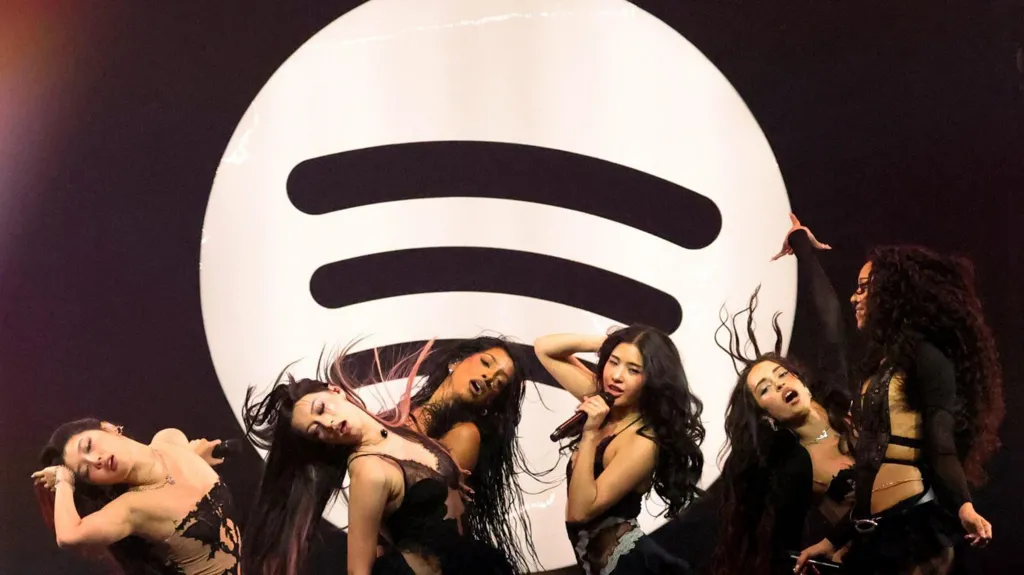
Spotify's annual Wrapped campaign, which summarizes users' listening habits, has proven to be a resounding success in attracting and retaining subscribers, according to the company's latest financial data. However, this growth occurs amidst growing discontent within the artistic community, which accuses the streaming platform of distributing insufficient royalties. The fourth-quarter report revealed that Spotify added 10 million premium subscribers during the period, exceeding analysts' expectations and reaching a total of 236 million paying users. Executives attributed much of this momentum to the viral phenomenon of Wrapped, which generates billions of social media impressions each December and fosters a sense of community and personalization among listeners.
The context for this growth is a music industry increasingly reliant on digital streams, yet where revenue distribution remains a chronic point of friction. Spotify operates under a "pooled royalty" model, where subscription and advertising revenue is aggregated and distributed to rights holders based on their share of total streams. Critics like the Union of Musicians and Allied Workers (UMAW) argue that this system leaves most artists with minuscule payments, often below a penny per stream, insufficient to sustain a career. "Wrapped is a brilliant marketing exercise that masks a grim economic reality for creators," stated UMAW spokesperson Lena Kaur in a recent release. "While users share their lists with colorful graphics, musicians struggle to pay rent with the crumbs they receive."
Relevant data published by independent studies, such as the "Fairness in the Music Streaming Economy" report from the University of Glasgow, indicates that approximately 3.5 million monthly streams are needed for an artist to reach the average minimum wage in the UK, a figure unattainable for 99% of musicians on platforms like Spotify. In contrast, Spotify's operating income showed significant improvement, reaching a profit of €68 million in the quarter, compared to losses the previous year. The company has implemented some measures to address criticism, such as the "per-stream" model for very niche tracks and the increase of subscription prices in over 50 markets during 2023.
The impact of this duality is profound. On one hand, Wrapped has become a global cultural event that reinforces brand loyalty and turns users into evangelists. On the other, it fuels a debate about the sustainability of the streaming model for the next generation of artists. Some independent labels and established artists, like Radiohead's Thom Yorke, have withdrawn select catalogs in protest, although the critical mass of music remains on the platform due to its irreplaceable reach. The emerging conclusion is that Spotify is at a crossroads: its success in consumer engagement is undeniable, but it must innovate in its payment structure to appease the creative base that fuels its service. The platform's future may depend on its ability to balance marketing-driven growth, like Wrapped, with genuine economic reforms that ensure a more equitable and sustainable music ecosystem in the long term.