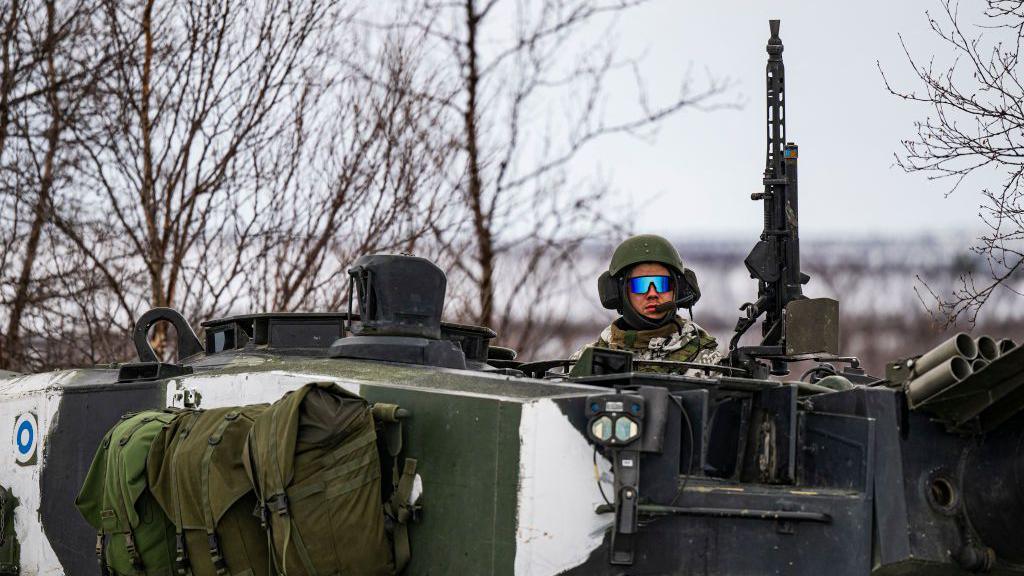
In a geopolitical shift of major significance for European security, Finland is laying the groundwork to revoke a longstanding national ban that has prevented it from hosting nuclear weapons on its soil. This measure, which still requires parliamentary approval, represents a fundamental change in the defense posture of the Nordic country and is directly linked to its recent accession to the North Atlantic Treaty Organization (NATO), completed in April 2023. The decision comes amid heightened tensions with Russia, with which Finland shares a 1,340-kilometer border, and reflects a deep reassessment of national security doctrine in light of the war in Ukraine.
The ban, rooted in Finland's policy of neutrality and non-alignment maintained during the Cold War, was enshrined in national legislation. Its lifting does not mean Finland will immediately request the deployment of NATO nuclear assets, but it removes a domestic legal hurdle that could have prevented it in the future. This step is seen as a strategic deterrent measure and a way to fully align its defense stance with the principles of the Atlantic Alliance, whose strategic concept includes nuclear deterrence as a fundamental pillar. Finnish President Alexander Stubb has emphasized that the decision falls within the sovereign right of every NATO member nation to participate in collective defense planning.
The process involves amending national legislation, which will be debated in the Finnish Parliament (Eduskunta) in the coming months. Parties in the ruling coalition have expressed support, although some opposition groups and civil society organizations have voiced concern. Critics argue that hosting nuclear weapons would increase the country's risk, making it a potential target in a conflict, and undermine global non-proliferation efforts. Proponents, however, contend that in the current security environment, marked by Russia's nuclear rhetoric and the deployment of tactical weapons in Belarus, enhanced deterrence is a necessity. Foreign Minister Elina Valtonen has stated that 'Finland is taking its responsibilities as a NATO member as fully as possible.'
The impact of this decision extends beyond Finnish borders. For NATO, it represents a significant consolidation of its northeastern flank and a demonstration of unity in the face of Russian pressure. For Russia, which had already labeled NATO expansion as a 'threat,' this move is likely to be interpreted as a further provocation, potentially leading to new rhetorical or military escalation in the Baltic region. Countries like Sweden, which joined NATO alongside Finland, may watch this process closely. Globally, the debate reignites questions about the future of nuclear arms control and strategic stability in Europe.
In conclusion, Finland's move to lift its internal ban on nuclear weapons is a clear symptom of how the war in Ukraine has reconfigured the European security landscape. It is a calculated step, born from a perception of existential threat, that seeks to maximize the security guarantees offered by NATO membership. While the physical deployment of such weapons is not imminent, the mere possibility alters the strategic equation in Northern Europe and marks the definitive end of Finland's era of neutrality. Parliament will now have the final say in a decision that will define the country's defense profile for decades to come.