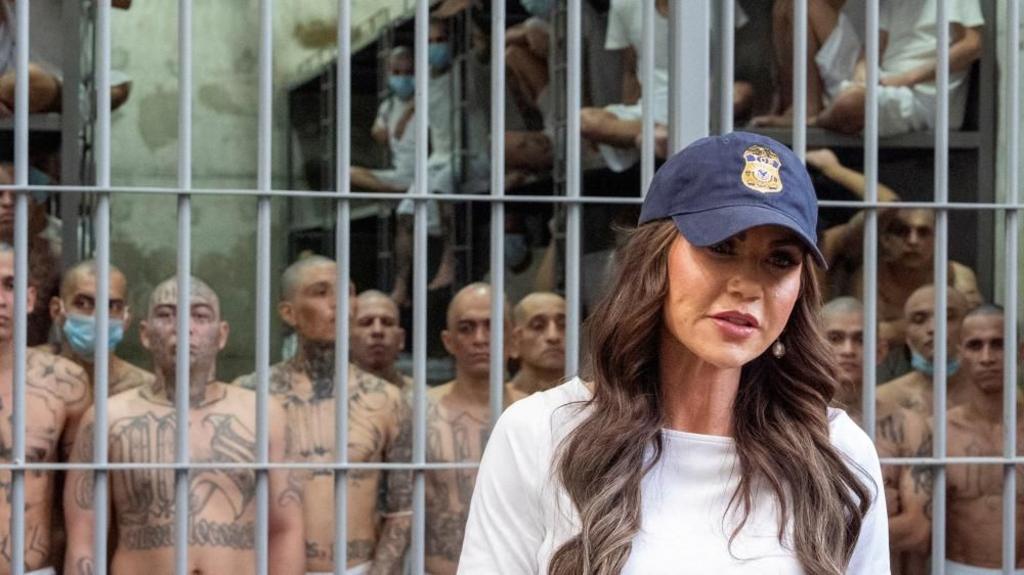
In a move that reflects the volatile dynamics of American politics, former President Donald Trump has decided to publicly distance himself from South Dakota Governor Kristi Noem following a series of controversies that have tarnished her image and her potential as a running mate for the 2024 election. This decision marks a significant shift, as Noem had long been considered a frontrunner on the list of possible vice-presidential candidates, praised for her alignment with the Trumpist base and her handling of the pandemic. However, recent reports concerning her management of homeland security matters, coupled with revelations about her past, have generated unsustainable scrutiny, leading Trump's team to conclude that her association has become a political liability.
The context for this rupture dates back to growing media and political pressure on Noem. While she gained national notoriety for her stance against COVID-19 lockdowns, attracting praise from conservatives, her record on homeland security has been called into question. Critics have pointed to controversial decisions related to the National Guard and the management of federal resources during crises. Furthermore, revelations about past encounters and her handling of certain security dossiers have provided ammunition to her detractors, both Democrats and Trump-skeptical Republicans. In today's hyper-partisan environment, where every detail of a candidate's past is scrutinized, these vulnerabilities were deemed too risky for a campaign that promises to restore "law and order."
Relevant data indicates that Noem's popularity among the Republican base remained high in South Dakota, but national polls showed her image among independent and moderate voters was weak, particularly in key Midwestern swing states. An internal Trump campaign memo, leaked to the press, highlighted that her favorability rating among suburban women had fallen by 15% following the latest revelations. This demographic is crucial for winning states like Pennsylvania and Wisconsin. Moreover, major donors privately expressed reservations about her ability to expand Trump's coalition beyond his core base, citing her polarizing profile.
Statements from close Trump allies paint a picture of cold political calculus. A senior adviser, speaking on condition of anonymity, stated, "She was a loyal soldier, but loyalty has limits when it comes to winning. The baggage became too heavy. There were too many distractions, and we couldn't allow the campaign narrative to be derailed by her issues." For her part, Noem issued a brief statement, saying, "I have always fought for conservative values and will continue to do so from South Dakota. I appreciate President Trump's past support." This carefully worded statement suggests a tacit acknowledgment of her exit from the national contest.
The impact of this decision is multifaceted. Immediately, it reopens Trump's vice-presidential search, putting names like Senators Marco Rubio and J.D. Vance, or entrepreneur and former presidential candidate Vivek Ramaswamy, back in the spotlight. It also sends a clear message to other Republican hopefuls: loyalty to Trump is a requirement, but it is not a guarantee of protection if they become an electoral drag. For the Democratic Party, this episode is campaign fodder, used to paint Trump as fickle and his circle as chaotic. In the longer term, Kristi Noem's national political future appears severely limited, at least in the short term, likely confining her to a state-level or media commentator role.
In conclusion, Trump's distancing from Kristi Noem is a stark reminder of the pragmatic and often ruthless nature of high-stakes politics. What was once a promising alliance between a former president seeking a comeback and a governor yearning for the national stage has dissolved under the heat of scrutiny and electoral calculus. The episode underscores the primacy of electability over personal relationships in Trump's machinery. As the race toward 2024 intensifies, this move allows Trump to recalibrate his message, free from the controversies associated with Noem, but it also raises questions about the coherence and stability of his selection process. The Noem chapter has closed, but the reverberations will influence Republican strategy in the coming months.