In the complex geopolitical chessboard of the Middle East, a non-state actor is emerging with military capability and strategic determination that could redefine power calculations in the region. Kurdish armed groups, particularly those based in neighboring Iraq, have been conducting meticulous preparations and accumulating capabilities that position them as a potentially decisive force in any confrontation scenario with the Islamic Republic of Iran. This preparation is not a new phenomenon, but the culmination of decades of resistance, organization, and adaptation to a perpetual conflict environment.
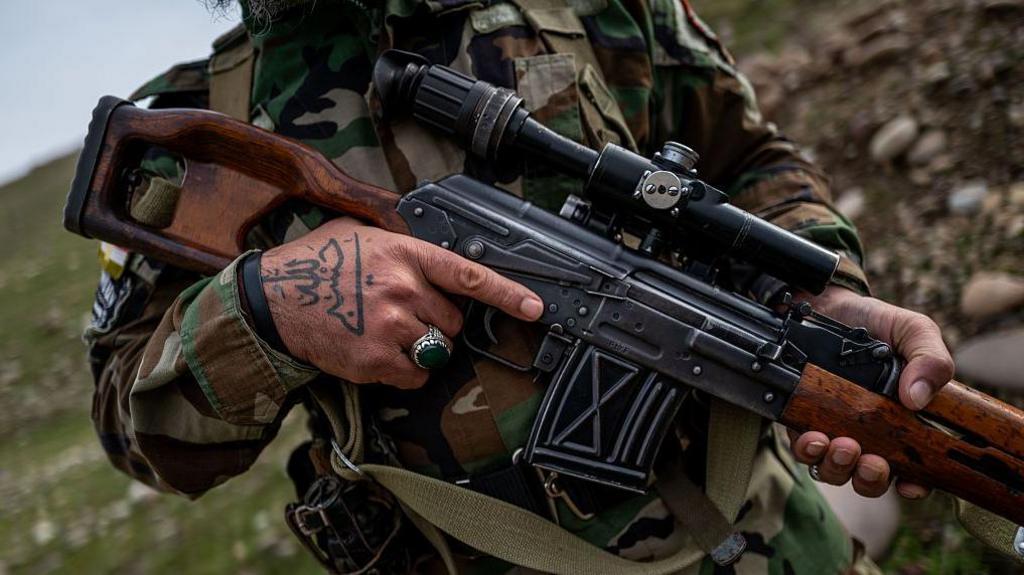
The context dates back to the long struggle of the Kurdish people for self-determination, a struggle that has seen its main groups, such as the Kurdistan Democratic Party of Iran (KDPI) and the Kurdistan Free Life Party (PJAK), operating from sanctuaries in Iraqi Kurdistan. These organizations have maintained a low-intensity insurgency against the Iranian government for years, but recent intelligence reports and expert analysis suggest a qualitative shift. According to regional security sources, these groups have been significantly strengthening their military capabilities, receiving advanced training, and establishing more robust logistical networks. 'We have been preparing not only to defend ourselves but to be a strategic actor,' a Kurdish commander recently stated to a regional publication on condition of anonymity. This preparation includes asymmetric warfare tactics, intelligence operations, and the creation of specialized units capable of operating behind enemy lines.
Relevant data paints a picture of a considerable force. PJAK, for instance, is estimated to have several thousand dedicated fighters, many of whom have gained invaluable combat experience fighting the Islamic State in Syria and Iraq alongside the People's Protection Units (YPG). This experience in conventional and urban warfare, combined with their intrinsic knowledge of the mountainous terrain of Iran's Kurdish region, makes them a formidable adversary. Furthermore, the strategic depth provided by semi-autonomous Iraqi Kurdistan, with which Tehran maintains a tense but necessary relationship, offers a relatively secure operational base. Analysts from the Institute for the Study of War (ISW) note in a recent report that 'the ability of Kurdish groups to launch cross-border raids or instigate internal unrest represents a chronic vulnerability for the Iranian regime, one that could be exploited in a context of increased international pressure.'
Statements from Kurdish leaders reflect this renewed confidence. 'Our people have endured oppression for too long. Our preparation is a response to that oppression and a guarantee for our future,' stated Mustafa Hijri, Secretary-General of the KDPI, in a recent interview. These are not mere boasts. Military observers have documented an increase in sporadic clashes along the mountainous border, with Kurdish groups demonstrating a greater ability to inflict casualties on Iranian security forces, including the powerful Islamic Revolutionary Guard Corps (IRGC). The impact of this dynamic is multifaceted. For Iran, it represents a persistent internal threat that consumes security resources and complicates its regional posture. For external actors seeking to contain Iranian influence, Kurdish groups present a potential, though politically delicate, de facto ally capable of opening a second front to distract and wear down the regime.
In conclusion, the meticulous preparation of Kurdish armed groups has transformed them from a localized insurgent nuisance into a potential 'proxy army' ready for deployment. Their knowledge of the terrain, ideological motivation, and accumulated combat experience make them the most plausible and effective 'boots on the ground' in any confrontation scenario within Iran's borders. While direct foreign intervention in Iran carries incalculable political and military risks, the Kurdish capacity to execute limited but high-impact operations offers an alternative strategic tool. The future of the region may depend, in part, on how this Kurdish card is played—a card that has been on the table, preparing in silence, for years. The growing Kurdish military capability is a reminder that in the Middle East, state borders often mask deeper, potentially volatile national realities that can resurface with unexpected force.