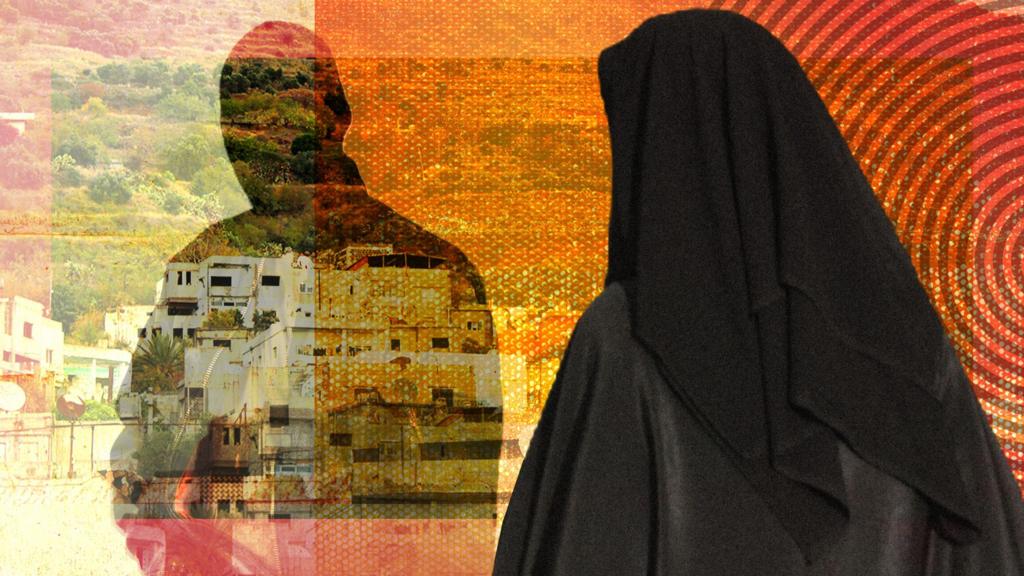
In the complex and brutal Syrian civil war, now stretching over a decade, human rights violations have been a constant. However, recent testimonies gathered by humanitarian organizations and international journalists shed light on a campaign of systematic sexual violence specifically targeting women from the Alawite minority, the religious group from which President Bashar al-Assad hails. These women, who have often remained silent due to fear of social stigma and reprisals, are beginning to tell their stories of kidnapping, captivity, and rape perpetrated by insurgent groups, primarily during the early years of the conflict.
The context is crucial to understanding this tragedy. The Alawite community, a branch of Shia Islam representing roughly 12% of Syria's population, has historically been a pillar of support for the Assad regime. This alliance has made Alawite civilians targets for retaliation by rebel factions, particularly those of a Salafi-jihadist ideology, who view them as heretics. The violence was not confined to the battlefield; it was deliberately brought into the civilian sphere, using women's bodies as a battleground to humiliate, punish, and sow terror within the entire community. Accounts describe a similar pattern: women and girls were snatched from their homes in raids, or kidnapped at fake checkpoints, only to be taken to clandestine detention centers where they suffered repeated abuse.
Quantitative data is hard to verify due to the chaos of war and the fear of reporting, but organizations like Amnesty International and the Syrian Center for Media (SCM) have documented hundreds of cases. A 2018 UN report already noted that sexual violence was used as a "tactic of war" by multiple actors in Syria. One survivor, identified only as "Rana" for her safety, told an independent outlet: "They took me to a house in Idlib. There were several of us. I lost count of the men and the days. I would scream in my sleep, and then I'd wake up and keep screaming. They stopped seeing me as a person." This quote encapsulates the extreme dehumanization and permanent psychological trauma these experiences inflicted.
The impact of these crimes is profound and multifaceted. On an individual level, survivors carry severe trauma, physical health problems, and the devastating stigma that comes with rape in a conservative society, often condemning them to ostracism and preventing them from marrying or reintegrating. On a community level, these acts have exacerbated sectarian divisions, fueling cycles of revenge and making any national reconciliation seem even more distant. The initial silence was not only out of fear but also due to the political instrumentalization of these crimes; the regime has used them to consolidate support from its Alawite base, presenting itself as their sole protector against barbaric rebels.
In conclusion, the testimonies of kidnapped and raped Alawite women represent an atrocious and deliberately overlooked chapter of the Syrian war. Their bravery in speaking out, despite the risks, is an act of defiance against the impunity that has reigned. Their stories are not merely a record of suffering but forensic evidence of how sexual violence can be methodically deployed as a weapon in sectarian conflicts. They demand, above all, that the international community does not look away and that justice and psychosocial support for survivors are prioritized as essential components of any future peace process in Syria.